Showing posts with label British Pop. Show all posts

Monday, November 5, 2012

Open Letter: Why Eduard Khil’s “Trololo” Should Be the Christmas #1


Every so often, a wondrous Internet meme of a non-lexical, nonsense song becomes earworm. A prime example is Adriano Celentano’s “Prisencolinensinainciusol”, a gibberish tune that topped the Italian charts in 1972 and has garnered millions of views on YouTube. That was my nonsensical pop music obsession of 2011. For 2012, there is no better candidate than Russian crooner Eduard Khil’s “Trololo”.


Initially titled “Я очень рад, ведь я, наконец, возвращаюсь домой”, the late Khil’s non-lexical Soviet pop sensation gained notoriety when it became an Internet meme in 2009. The title translated into English means “I Am Glad, ‘Cause I’m Finally Going Home”. How it came to become known as “Trololo” was because of the way it sounds. Here’s what the original sounds like:


Note that the song has, at the time of this writing, fifteen million views to date.

It garnered a minor cult following, including a joke on Family Guy:


There’s even a continuous ten-hour – yes, ten hour – loop of the song in a single YouTube clip, which you can see here:


It is in fact the only song by Khil available for purchase at the (non-Russian / Eastern European) iTunes store, where for 99 cents once can have the pleasure of listening to this musical nonsense nonstop.
We are about six weeks out from the infamous chase for the Christmas Number One on the UK music charts. Past winners of this title include vaunted pop classics by Paul McCartney, the Spice Girls, Whitney Houston and Pink Floyd. For those readers unfamiliar with the concept, this is a cultural phenomenon in Britain, a time when a mad crush of artists releases Christmas-themed songs and sing-song-y power ballads in a bid to see who will end up on top of the musical pile during the biggest sales period in the music industry for the entire year. Only sales in the week leading immediately up to Christmas Day counted towards the total, so timing is crucial.

In the last decade, the Christmas Number One single has been dominated by reality singing competition winners, such as Girls Aloud (who saw “Sound of the Underground” launch their successful career in 2002), Alexandra Burke and Leona Lewis. There have on occasion been songs that were released as explicit cash grabs that have nothing to do with the holiday, such as the Teletubbies’ theme song and Bob the Builder, some of which top the chart but often came up just short. Then there was the successful 2009 Facebook-enhanced campaign to get Rage Against the Machine’s anything-but-Christmas-y “Killing in the Name” to the top, which was started as a joke to counter the commerciality of the whole enterprise but actually became the Christmas Number One (I may or may not have purchased a copy).


True to the whole enterprise, there’s a huge Novelty Factor. Like comically ironic candidates like Rage Against the Machine and the insipid Teletubbies theme song (which was an unconsciously ironic choice), it’s the idea of taking the piss out of the whole occasion, with its seriousness and sentimentality, that makes it such a great idea.

It kinda sounds like a Christmas song. Sing “Trololo lolo” and what does it sound like? “Falalalala”. Reader, the gibberish rhythm makes it, combined with the instrumentation, almost sound like a forgotten Christmas classic, complete with orchestral sweep and chimes that make this sound like a Russian Bing Crosby. Okay maybe not that far, but it’s a musical facsimile, nyet?

It would be really, really funny. Having seen the Christmas Number One parody storyline in Love, Actually many, many times, I have been waiting for a blatant attempt at the coveted title with a song that mocks the insincere warbling of pretty young pop stars. Plus, an added bonus would be that the idea of having this top the chart would make musical executives rip out their hair in frustration. Can you see Simon Cowell having a fit that a decades-old record beats out his latest X-Factor investment, the one that was going to buy him a private island next to Beyoncé’s and Jay-Z’s?

Universal appeal. It’s the kind of “universal” record that the record companies try to get to appeal to everyone with the Christmas Number One releases. While the Spice Girls had three back-to-back-to-back titles from 1996 to 1998, non-English speakers would not be able to fully appreciate their singles. “Trololo”, however, is perfect in that anyone anywhere can sing along and enjoy it. Plus, it offends absolutely nobody (except aforementioned record company executives) and language is not a factor. You could play this to anyone of any race, age, religion, gender, political affiliation, sexual orientation, nationality or ethnicity and they would get it. I always wondered: in that old 1972 commercial “I’d Like to Teach the World to Sing”, what song would the singer like to teach to sing? It sure isn’t Michael Jackson or “Express Yourself”, because it’d be too tough with the language barrier. Just throw “Trololo” on and have everyone sing, and you could bring about world peace. Heck, for those opposed to pop music as being “too westernized”, let me remind you: this is a pop record from Soviet Russia. (This also explains Eurovision.)

If you can buy “Gangnam Style”, you can buy this as your next earworm. Self-explanatory.

So if you’d like to teach the world to sing, have a laugh and get a perfect score at karaoke while getting caned at your parents’ place, get “Trololo” to the Christmas Number One! And remember: you can only buy it during the week leading up to Christmas in the UK, so that the sales count.

With thanks to our friends at Gay French Riviera for the tip!

Tuesday, April 10, 2012

Sound Advice: on Shirley Bassey’s “Get the Party Started”

For those younger readers out there, the name Shirley Bassey doesn’t ring much of a bell. However, if I were to play you her two signature tunes from the James Bond films – “Goldfinger” and “Diamonds Are Forever” – you will hear that voice and know that singer, for no one else can utter that voice that suggests images of jewels slinking their way seductively out of a velvet pouch.

Having been absent from the music scene since her heyday in the 1960s and 1970s, Dame Shirley spent much of the 1980s and 1990s focusing on charity work and undoubtedly living off the residual income from her immortal recordings. Then, in 2006, she recorded a big, brassy version of P!nk’s smash record “Get the Party Started” for a Marks & Spencer commercial. It contains a slightly halted, almost spoken-word utterance of the opening verses before belting into a powerful crescendo.

Dame Shirley, eschewing the trend of aping youth in the name of commercial art (are you listening Madonna?), instead embraces her signature sound. The cover has big, sweeping brasses with a drum machine that grooves without wearying out the listener in a frantic attempt to party! Hard! Right! Now! The effect is a bold cover that can easily be remixed and made into a dance-club smash (if you want to party hard right now). It could be played as ambience at a more sophisticated lounge or social mixer. Or it could provide the perfect soundtrack to New York Fashion Week while models float about in the latest by Tom Ford or Mary Katrantzou. Although Bassey’s version of “Get the Party Started” doesn’t have the bouncy R&B-inflected youth pop of P!nk’s original smash, it does have what P!nk’s doesn’t have: a sense of occasion.

The popularity of Dame Shirley’s recording lead to the release of a 2007 cover album bearing the same name. To round out the album and flesh out its theme, the recording is big on interpolating brass and drum machine, giving the album grandeur and sonic sweep worthy of a dame. While not every song pops the way her cover of “Get the Party Started” does, there’s plenty to accompany your evening. The list of covers includes a saucy “Big Spender”, a worthy interpretation of Grace Jones’s “Slave to the Rhythm”, a suitably earth-shattering “I (Who Have Nothing)” and yes, another Bond cover, “You Only Live Twice”. The album, in a sign that music consumers still have good taste, became a Top Ten hit in the U.K. This was when she was 70(!!) years old, looking and sounding as beautiful and regal as the day she first blasted her way onto the airwaves nearly half a decade earlier.

And laced through the recording is that big, magnificent voice. Yes, Dame Shirley is still a belter and can indeed get your party started, whatever the occasion. There is nothing like a Dame.


Friday, November 18, 2011

The Desert’s Mystery: Everything but the Girl's “Missing”

I don’t often get song lyrics wrong. No, I did not think that last night, Madonna dreamt of some bagels in “La Isla Bonita” (it helps that I grew up speaking some Spanish and knew it was an invocation to San Pedro). I did not believe anyone would excuse themselves so that they can kiss some guy. It used to bother and amuse me that North Americans could not get the words correct to songs in their first language while no one bothered learning anything other than English as a means of communication. This used to annoy me until it happened to me in late 1995.

The British dance duo Everything but the Girl (who I will refer to as “EBTG” from here on out) were known to underground American audiences, but had never achieved mainstream success despite considerable critical acclaim. They had made their reputation as a folk and jazz act to some success in their native Britain but hadn’t broken through outside of Europe. Their 1994 single “Missing” was a guitar single about a woman pining for her long-gone lover, one who vanished without a trace but who more than likely simply changed addresses. She goes to his street from time to time, wandering and wondering what might have been. It’s a mournful confession, the kind of lament you hear in the wee small hours of the morning after a drunken night of introspection. It’s exactly the kind of self-reflective poem or letter you write, re-read the morning after and, in the harsh light of day, throw out in a fit of embarrassment and disgust.

In 1995, EBTG decided to give “Missing” to American house music DJ Todd Terry to remix and play in nightclubs. The resulting work turned the song on its head. The opening slam and staccato rhythm, followed by a lilting guitar pluck, and slithering beat was a call to attention. When that slam first got onto the radio, it made you stop and listen. In the brief acoustic interlude, EBTG lead singer Tracey Thorne announces that she had stepped off the train and was walking down her street. She knows her lover is no longer there, but she’s going to check it out anyway. The beat was sinister and, paired with Thorne’s plaintive vocal, produced musical alchemy. Her little trip down your street was fueled with a mission and a driving force that suggests her quest to find you will not be denied. It’s the sort of single that Adele Hugo would have recorded had she been born a century and a half later and had a recording studio in her room at the asylum.


Wednesday, October 19, 2011

Road Show: Portishead on Tour


[Ed. N.: This post originally ran on July 13, 2011, and is re-published to coincide with the band's current fall 2011 tour. This post also includes new tour dates, appended below.]


Sometimes, nothing hurls you gob-smack into the middle of your youth like hearing from an old favourite band. In the spring of 2008, the Blogger gleefully heard that the long-dormant, presumed-defunct mid-90s British trip-hop combo Portishead were releasing their first album of new material in over a decade. Suddenly, the writer shed all layers and armour of his presumed adulthood and opened the closet door (pun intended) to an awkward adolescence defined by sexual anguish, bad complexion and an unfortunate amount of flannel.

Portishead’s landmark disc, 1994’s Dummy, swept onto our shores with the emo movement, well before emo was even a catchphrase. Its numbing, sonic landscapes provided a lushly enveloping cocoon as turbulent as our feelings. Lead singer Beth Gibbons’s faraway vocals may have sounded disconnected at times but would descend into whispered anguish so potent it hardly dared to unleash its full force for fear that it might smash your stereo to smithereens. The chilling, spooky lead track “Sour Times (Nobody Loves Me)” brilliantly married a seemingly runaway snippet of old Hitchcock score with a fractured, hurried beat that somehow made for a brilliantly gruesome aural death match. The song laid siege to my Discman (remember those?) for several months in the spring of 1995, winning the prestigious Mercury Music Prize along the way.


“Sour Times” was accompanied by a haunting video with a now-cult-iconic image of Gibbons being interrogated in the bowels of MI-5’s office. Its juxtaposition of musical elements and the accompanying clip almost dared the listener to tell us just how awful we felt about ourselves at the time. How we felt at the time was a closely guarded secret, as personal and potent to us as the whereabouts of certain political renegades are to heads of state. Such experimental fare had maximal impact on MTV and radio at the time, but would have no room for the crass “reality” swindle and shallow, cookie-cutter contemporary radio that currently pollutes popular art and the public consciousness.

A decade passed after Portishead released their acclaimed second disc in 1997, and promptly vanished. In particular, they developed on their self-titled second disc the drama and orchestral sweep which would later inform Third. In particular, the magnificent, gut-wrenching “All Mine” that is nothing less than a shriek of passion from the depths of romantic misery and possession.


Take a listen and maybe you’ll see understand how it wouldn’t be out of place in a modern updating of Wuthering Heights.

They left behind a musical legacy evident in works by trip-hop artists like Massive Attack, who continue its evolution of sound long after the public was distracted by more disposable fare. Proof of Dummy’s lasting popular impact was immediate when, within nanoseconds of posting the news of the tour's announcement on Facebook, three of the writer’s friends wrote to proclaim their love for this remarkable band. Such swift declarations of love from a decidedly uncommercial, almost obscure British band speaks volumes on Dummy’s remarkable, lasting visceral power. Gibbons and company had cut through to the emotional core of its audience when first released and unwittingly held onto it. If the album were not as effective, then it would not have brought about such spontaneous adoration.

Saturday, July 30, 2011

Someone Like Adele

[Originally posted on May 26, 2011. Updated to include new tour dates and venue information.]

The Blogger nearly walked out on a date a few months back. When he professed his love for the music of Adele, whose gloriously bluesy soul has not left his iPod since the start of 2011, his dining companion declared, “Yeah, I can see why you like her. But I think she’s too easy to like, you know?” No, I don’t know. Why should good music be difficult to be appreciated? Sometimes, all you need is a piano and a voice.

British singer Adele finally achieved global domination in 2011. She scored the dual honour of having the Number One album and single in the UK at the exact same time for several weeks earlier this year, a feat achieved by few artists. Her popularity was such that she had two singles in the Top Five at the same time that she achieved two Top Five albums simultaneously, a feat that only she and the Beatles have accomplished. Adele’s current disc 21 entered the American album charts at the summit and her single “Rolling in the Deep” is the reigning Number One hit. See? It’s not too easy to like, is it now?

Adele herself may have underestimated her own appeal in North America. When tickets went on sale for her current tour, there was a small hysterical dervish evidenced by the hordes of Facebook account holders who despaired at not being able to get tickets. Adele is playing the Blogger’s hometown of Vancouver at the Orpheum Theatre on August 9 (rescheduled from the original date of May 31), and tickets were literally sold out in seconds: 180 of them, to be exact, or a scant three minutes. The only show in recent memory to sell out so quickly is the pair of Lauryn Hill shows last May. Despite the move from the intimate Commodore Ballroom to the larger Orpheum, one feels that there was a missed opportunity for the newly-minted global superstar to sell out even larger venues or play over several nights.

But what’s so easy to like about Adele? It’s simple, really: she’s a blue-eyed soul singer, tinged with a hint of blues. Imagine a combination of Dusty Springfield’s grit, Kate Bush’s lush crooning, Bonnie Raitt’s rockabilly groove and Etta James’s growl, simmered to sonic perfection. Now add Lauryn Hill’s wisdom and sensibility to the mix, combined with Amy Winehouse’s wit (although unlike the recently deceased Winehouse, Adele has been clean and sober for years),  and you’ll understand the gift Adele shares with the world.

Sunday, July 24, 2011

Back to Black: Amy Winehouse, 1983-2011

The Blogger has been haunted lately. The sound of Amy Winehouse’s tortured soul has been hanging around, wailing to be heard. The singer passed away on July 23, 2011, at the young age of 27. She leaves behind a musical legacy consisting of just two albums, both of them amongst the most highly accomplished works. In particular, her seminal sophomore album Back to Black remains, despite her personal troubles and disturbing public behaviour, one of the greatest music albums ever recorded.

Back to Black was a shot of musical nirvana upon its release in the fall/winter of 2006/07. The album combined blues, jazz, Motown and R&B into an inventive hybrid that crossed several genres and showcased a unique musical talent. The result was lightning in a bottle.

Critics and audiences enthusiastically agreed, as Back to Black topped the British album charts for several weeks and ultimately became one of the three biggest-selling albums of the decade. In the United States, the album peaked at Number Two and sold millions, also producing a number of hits including a Top Ten placing for “Rehab”. Amongst the numerous honours Winehouse earned for her work were prizes from the Brit Awards, the Ivor Novello Awards, MTV Europe Awards and a record-tying five Grammy Awards.

Lead-off single “Rehab” was not only Winehouse’s most autobiographical song, but it was also a defiant cri de couer that laid bare her most destructive tendencies. Her refusal to go to rehab, her eventual brief visits (bookended by visits to the pub) and the romantic troubles that likely fed and resulted from her alcoholism and drug abuse, in a vicious and cannibalistic cycle, were all captured in just three minutes. Her self-destructive habits were very bravely explored here but arranged so in such a sonically genius fashion that it not only made a thematically dark song wildly popular, but also a karaoke staple (which was usually sung, appropriately enough, after a few rounds of drinks).

The other songs on Back to Black grew out of Winehouse’s depression and personal struggles. “Love is a Losing Game” and “Tears Dry on Their Own” speak to romantic disappointment. “He Can Only Hold Her” tells of a destructive codependent romance. But perhaps the darkest, most honest and shattering moment of the album is the disc’s title track. It is a disquieting breakup song that hints at the self-harm Winehouse inflicted upon herself in her young and tragic life:

Thursday, June 9, 2011

Sound Advice: Imelda Marcos, Here Lies Love

Not since the Manic Street Preachers announced that their 1998 album This Is My Truth, Tell Me Yours would be inspired by the Spanish Civil War has a concept album taken on such an unorthodox subject. The announcement in 2006 that Talking Heads’ David Byrne would collaborate with Norman Cook (AKA Fatboy Slim) on an experimental rock/dance musical based on the life of Imelda Marcos was met with raised eyebrows. After all, would a rock album featuring an all-guest vocalist album made up of mostly Brits, based on the life of a notorious political dictator’s flamboyant wife, living in a former Spanish colony,  work? 

[Cue to the Blogger’s iPod shuffling to Evita. You win, Steve Jobs.]

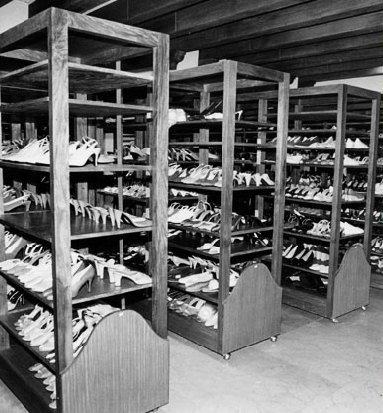
The Blogger was born and raised in the Philippines, during the latter years of the Marcos regime. Even at a young age, the Blogger received an extremely colourful political education and witnessed the populist “People Power” uprising following the 1986 elections that swept Corazon Aquino to power and drove the Marcos family out of the country. Through it all, no matter how complicated the machinations of power worked feverishly to create history, just about everyone did focus on the colourful First Lady Imelda Marcos, her flamboyant life, outrageous manner, and of course her infamous shoe collection. (The Blogger still gets teased for this every single time he goes shoe shopping. Every time.)

The shoe closet. "Only" 1,060 of them.
Imelda, with her inappropriate predilection for luxury goods when her country was awash in poverty, was so flamboyant that she came to be known simply by only her first name. It signifies her iconic stature, regardless of whether one reveres or ridicules her, that she would need just her first name to let everyone know exactly who she is. Her love of shoes (which no one has ever referred to as a fetish, ever wonder why?) is not just the stuff of legend, but also common knowledge. There is a quote in the shoe department of a local department that has this on the wall:

I did not have 3,000 pairs of shoes. I only had 1,060.” – Imelda Marcos

So much is encapsulated in that one quote. There’s even more in some of her other quotes, showing perhaps just how out of touch with her people she was (and if she wasn't, how she grew to that state):

Friday, May 20, 2011

Old Friends, Back for Good: Take That on Tour

On Friday, May 27, the British group Take That are starting yet another major tour of the British Isles and continental Europe. The group, comprised of Gary Barlow, Mark Owen, Jason Orange and Howard Donald, is coming off two highly successful series of shows within the last five years but will now have an additional weapon to make this latest juncture a blockbuster. The Progress Live Tour, in support of the album of the same name that is the fastest-selling album in the UK this century, will see the return of its prodigal son and most famous member, the immensely popular but troubled Robbie Williams, to the line-up. This makes the first time that all five founding members of the band will tour together since 1995, when Williams famously left the band after vanishing in the midst of a tour, surfacing at Glastonbury and announcing that he was sacked and / or had quit (depending on your point of view).

Forerunner of A&F catalog, circa 1993
Take That first came to cultural dominance between 1991 and 1996. In that five-year span, they released three multi-platinum albums and scored an astonishing run of eight Number One hits from a dozen Top Ten singles. Created in the mold of the American boy band New Kids on the Block (that’s NKOTB to you), Take That’s success in the UK, Europe and Asia was built partly on the still-hummable tunes by its songwriting progeny Barlow and partly on the band’s public image. Chiseled and buffed within an inch of their lives, all five members appeared in various stages of undress in their videos (such as their first Number One, “Pray") and they were one of the first major male pop stars that used model-ized imagery with a homoerotic current. Most of their publicity stills and videos from that era undoubtedly had no small influence on the fashion world, and it is not coincidental that the Abercrombie & Fitch catalogues of the last decade and a half have looked like their videos.