Showing posts with label Oscar. Show all posts

Friday, March 2, 2012

Oscar 2012: the Aftermath

Best Actress and Best Actor
Less than a week after the most epic of parties, with the red carpet all rolled up, and the stars all (hopefully) back at work, here are some random notes on this year’s Academy Awards aftermath. I’m not concentrating on the actual show itself, but discussing the ultimate question: what does it all mean?

Let’s discuss the success of The Artist. It wasn’t a clean sweep, Lord of the Rings-style. It was more like a respectable showing, a la Chicago in 2002. This doesn’t mean that studios are rushing to make eclectic projects like this one. Harvey Weinstein is not overcome with a sudden urge to bring back silent movie en masse. What this does mean, as a business model, is that the major studios and boutique shops (like The Weinstein Company and Focus Features) will continue to attend film festivals and acquire domestic distribution rights to worthy projects, dress them up in critical praise, and create Oscar campaigns for them. No, the major studios are still producing Transformers sequels and busily re-booting tried-and-true franchise options. (Unless you’re Christopher Nolan or Steven Soderbergh and can do whatever the hell you want.)

Jean Dujardin will continue to be a star in France, and his next few projects might get limited release in North America, but people here may forget he exists. The real test of longevity will be how he navigates his career without TWC’s direct involvement. He’s charmed everyone by appearing on talk shows, participating in that hilarious Funny or Die video, and he’s sexy to boot. He will now have to decide if an American project might entice him and he can become a domestically-recognized movie star, or if he’ll continue in French films exclusively. He may want to call fellow French Oscar winner Marion Cotillard, for tips. She’s continued working in their native France while also taking on strong supporting roles in such prestige projects as Inception, Nine and Midnight in Paris, all of which were nominated for or won Oscars. Dujardin will have to choose wisely, and I can’t wait to see what he does next. In the interim, it’s likely that his next film Les Infideles, which caused some controversy in France due to its outrageous movie poster, will be given a local release.

Now that Meryl’s won an Oscar for her outstanding performance in The Iron Lady – a film I did not love but in which she was tremendous – the pressure’s now off to give her a third Oscar, something people have been buzzing about since at least 1985. She still has more nominations than any performer, living or dead, and as many Oscars as Jack Nicholson and Ingrid Bergman, one away from Katherine Hepburn’s all-time record. However, the next person in line for the Best Actress award will be none other than fellow nominee Glenn Close. Seeing Close on the red carpet for the first time in years, looking beautiful but also age-appropriate given the lack of any (obvious) plastic surgery, should remind the Academy to take notice of the outstanding work she’s done since her last Oscar nomination 23 years ago. She’s since won two Tony Awards and three Emmy Awards (and countless nominations) for, amongst others, a political stage play, a big-budget Broadway musical smash, noted miniseries and excellent ongoing work for serious, prestigious television series such as Damages and The Shield. Heck, Damages just might be her signature role and may outclass almost about everything she’s ever done in film. She’s now lost at the Oscars six times. She is due. Her next project is Thérèse Raquin, currently in pre-production. This is an adaptation of an oft-performed Emile Zola play and novel, smells of prestige, and is due out next year. Close for Oscar, 2014? It could happen.

Wednesday, February 22, 2012

Oscar 2012: Best Picture

For my entire coverage on the Academy Awards, click here.

A few ground rules on the likely Best Picture winner. In Oscar history, the winner almost always takes Best Director as well, or is at the very least nominated in that category. It is also often a nominee or winner for Best Screenplay (either Original or Adapted). Remember the rules that I had mentioned in my post on Best Director, they are for the most part true. Taking this rule into consideration, we can realistically remove several of this year’s nine Best Picture nominees out of contention for the big prize: The Help, Extremely Loud and Incredibly Close, War Horse, Moneyball and The Tree of Life. That leaves us with four viable Best Picture contenders: The Artist, Hugo, The Descendants and Midnight in Paris.

With such a huge crowd, going through each nominee with the above hard-and-fast rules and applying to each nominee, we can whittle down the likelihood of each nominee’s chance to win the big prize.

First off, let’s forget the jaw-dropping inclusion of Extremely Loud and Incredibly Close. Stephen Daldry’s surprise nominee was supposed to have been Oscar bait, with across-the-board nominations and big box office to go with it. It touches on the sensitive legacy of 9/11 and is the first tackling the subject to get into the final group. But with its below-average critical reviews and soft box office (even with big stars like Tom Hanks and Sandra Bullock it pulled in barely $30 million), it looks like a prestige project that disappointed. Without directing or writing nominations, it’s the first rank outsider.

We can also knock off The Tree of Life. It’s a big-budget film several years in the making, brought in a small box office take, and despite overall strong critical notices, those who didn’t like the film outright hated it: viciously, passionately, vociferously. It’s just too “out there” for more conservative Academy members. It’s out.

Next to be removed from the list is another big-budget Oscar-bait prestige project, Steven Spielberg’s War Horse. It had the pedigree of a likely winner: Pulitzer Prize-winning source material, one of the most popular film directors of all time at the helm, and it performed strongly and steadily commercially. Without directing or writing nominations, however, and a near absence from the winning circle at the guilds, it’s just an also-ran. Note that of its six nominations, five are in below-the-line technical categories.

I’m going to also remove Moneyball on the basis that despite six nominations including four high-profile ones, it didn’t win any of the precursor Best Picture awards and lacks a directing nod for Bennett Miller. Had he made it into that category, this popular and critical favourite would have made a much stronger case.

I’m reluctantly removing The Help from consideration as well. I had previously thought it had the mileage to go the distance, since it’s a big box office success and tackles race issues in America. The closest parallel I had with it was Crash, which was the upset winner six years ago, but even that had directing, writing and editing nominations to go with it. The Help doesn’t have any of it. Its other close parallel was 2009’s The Blind Side, but it also lacked these nominations and its popularity alone couldn’t let it get past The Hurt Locker.

Let’s turn to the remaining contenders, which you can view after the jump.

Sunday, February 19, 2012

Oscar 2012: Best Actor

This year’s Best Actor Oscar race is similar to the Best Actress contenders. There are two main contenders neck-and-neck at the front, with a possible spoiler, a veteran dark horse, and a surprise nominee. In other words, as with Best Actress, we’re looking at a nail-biter down to the finish line, making this first time in years where there is no clear winner or obvious choice.

Here are the nominees for this year’s Best Actor Oscar.

Demián Bichir for A Better Life

For him: A shock nominee, many feel that he took a spot that may have been meant for a bigger star (cf. Leonardo DiCaprio in J. Edgar). His little-seen art-house film, for those who have actually seen it, is beloved by a small but vocal group of voters and word is that those who’ve seen his performance declare his work to be the best, hands-down. He received a surprise SAG nomination as well, indicating popularity and support amongst his actor peers.

Against him: Very few people saw this film, which is streaming on Netflix after an unremarkable theatrical run. SAG nod aside, he received no other recognition this season. The film, about the immigrant experience in America, is topical and challenging, and may be a bit too political for more conservative voters’ taste. He also represents the lone nomination for his film and at least three of his nominees are front-and-center in Best Picture nominees. For Bichir, the nomination is the reward.

George Clooney for The Descendants

For him: I’ve referred to him as “Mr. Popular” more than once, and indeed he has support from critics, audiences and the Academy alike. He’s won the Golden Globe, Critics Choice and National Board of Review honours this year for his role. Clooney has career-best notices and he’s in a Best Picture nominee with broad-based support. He’s proven his versatility by having received seven career Oscar nominations (to date) in the fields of writing, directing and acting. He’s even nominated for Best Adapted Screenplay for his well-received directorial effort The Ides of March. Somehow he’s straddled the gossip pages and the critics’ notices, winning respectability while also gracing magazine covers. Although he has a Supporting Actor prize already, for a leading man of his stature, it’s only fitting that he one day win the Leading Actor award as well. Is it time?

Against him: He’s already got an Oscar. It may be too much, too soon, and it’s not like he won’t have any other chances later on in his career. He’s got to watch his back as there’s a great challenge in the form of exciting newcomer (on this side of the pond) Jean Dujardin and his good friend Brad Pitt, both of whom are nominated and are leads in Best Picture nominees. Perhaps Clooney will one day be recognized for directing or writing, instead?

Jean Dujardin in The Artist

For him: Not initially the frontrunner, this charming Gaelic superstar – who’s as big as Clooney and Pitt in France – added to his Cannes Film Festival award by sweeping the Golden Globe, SAG and BAFTA prizes within the last month. He faces an acting challenge that no one else in the category takes on in that the role is a silent one. Dujardin didn’t even speak much English a year ago, and yet he learned it in a crash course and has been hitting the American talk show circuit to promote the film tirelessly, even hosting Saturday Night Live. That, folks, is dedication. The mighty Harvey Weinstein’s TWC is behind the campaign and they get results. He could win his award a la Roberto Benigni’s surprising victory for Life is Beautiful.

Against him: The Benigni comparison is a double-edged sword, as it is one of the more derided and criticized Oscar wins in the last twenty years. Dujardin has not yet signed on for any roles in Hollywood, which might make Academy members who are prone to cronyism a bit cagey about choosing a foreigner for the prize. (Then again, that didn’t stop them from choosing all-foreign winners in 2007.) Since the role is silent, they may also wait until they see him in a speaking role before rewarding him. Some Academy members may be resistant to seeing a high-concept silent movie.

Gary Oldman in Tinker Tailor Soldier Spy

For him: One of the most revered film veterans, a one-time experimental and still-edgy British actor, Oldman has switched effortlessly between independent films such as Withnail and I and big Hollywood blockbusters like Bram Stoker’s Dracula and the Harry Potter franchise. It’s been widely noted that this is only his first career Oscar nomination and that might lead some to vote for him as a de facto career award.

Against him: He was MIA from all of the precursor award shortlists and needed at least one major win to make a stronger case for him here. He was the frontrunner for BAFTA, his one solid shot all season at a major acting prize, but he still lost when Dujardin and The Artist cleared the board there. With so many of his fellow nominees in Best Picture nominees, it’ll be tough to make a case for his win. He’ll be back.

Brad Pitt in Moneyball

For him: Like Clooney, he’s insanely popular, a global superstar with few peers. He’s also a multiple nominee this year, as he’s credited as a producer on Best Picture finalist Moneyball. Won the notoriously tony New York Film Critics and National Society of Film Critics best actor awards, indicating that they fully support his artistic choices. And with his role in The Tree of Life, he’s the only nominee in this category to appear in two Best Picture nominees, speaking to the adventurousness of his roles and its artistic payoff. It may be irresistible to Academy voters to give him a statue, as longtime spouse Angelina Jolie has one as well.

Against him: He may be too much of a tabloid favourite to get Hollywood’s most glittering prize. With Clooney and Dujardin winning the lion’s share of awards in the last month of the season, and both their films still playing in theatres, Pitt might have lost some momentum for Moneyball. It’s a talky role, with lots of long monologues, but doesn’t have the big emotional breakdown or typical “Oscar clips” that his main competition has. Perhaps like Robert Redford, to whom he has often been compared, he’ll win for producing or directing one day, instead?

The lowdown

I mentioned that the race was a parallel to Best Actress. In terms of the winners’ chances, here’s how I break them down:

Jean Dujardin = Viola Davis – the likely winner, a mid-career character actor in a Best Picture nominee
George Clooney = Meryl Streep – the megawatt star who was the early frontrunner, but will be recognized again in the future
Brad Pitt = Michelle Williams – the spoiler who could sneak through if the two leaders cancel each other out
Gary Oldman = Glenn Close – respected veteran who could have won had his / her film received more support (coincidentally, both films have three nods apiece)
Damien Bichir = Rooney Mara – surprise nominee and out-of-left-field shock winner if this happens, and neither name slips off the tongue easily

I’m forecasting a win for Dujardin, but won’t be surprised if Natalie Portman reads out “George Clooney” instead.

The Oscar will go to: Jean Dujardin for The Artist.

For more Oscar-related coverage on this blog, click here.

Thursday, February 16, 2012

Oscar 2012: Best Director

To start, there are a few simple rules for predicting the Best Director Oscar winner. In general, here they are:
  1. The winning director has almost always won the Directors Guild of America (“DGA”) prize a few weeks before the Oscar ceremony.
  2. The Best Director Oscar often goes hand-in-hand with a Best Picture win for the same film.
  3. If the DGA and Best Picture Oscar don’t match, the Best Director often goes to the DGA winner anyway (cf. Born on the Fourth of July, Saving Private Ryan, Brokeback Mountain).

And now, as with all rules, there are a few exceptions. These aren’t hard-and-fast loopholes or rules, they just … happened when the envelops were opened and the winner announced.
  1. The first instance of the DGA prize not matching up with Oscar was at the 1968 awards, when DGA winner Anthony Harvey lost for The Lion in Winter to Carol Reed for Oliver!
  2. Further to exception #1, there have been a few instances when the match-up failed to materialize: 1995 (Mel Gibson over Ron Howard); 2000 (Steven Soderbergh over Ang Lee); 2002 (Roman Polanski over Rob Marshall).


In other words, all things being equal, the DGA winner is the single most powerful prognosticator of who may win the Best Picture Oscar. Last year, David Fincher looked absolutely unstoppable for the Oscar, until Tom Hooper scooped the DGA and went on to claim the Oscar, and The King’s Speech outdrew The Social Network for the top prize. In other words, the DGA is almost absolutely authoritative when it comes to predicting the Oscar, like a Supreme Court decision with little to no room for appeal. It also has a domino effect, as the prize also often dictates the Best Picture winner, and may have a trickle-down effect in the lesser categories, resulting in a Slumdog Millionaire-style sweep.
We already know that Michel Hazanivicius won the DGA for The Artist. This already gives away who I think will take home the Oscar. But in the event of an upset – such as the jaw-dropping victory Roman Polanski pulled off in 2002 for The Pianist over Chicago’s Rob Marshall – let’s consider how the other nominees stack up against him.

Michel Hazanivicius for The Artist

For him: DGA winner. Also just scooped up the BAFTA. He has been responsible for the entire picture, from writing the script to directing it, and even editing it long after production ended. Hazanivicius is nominated for three, count’em three, Oscars this year, for each of those efforts. It shows creative complete control from beginning to end, short of actually coming up with the funds to produce the picture. In terms of money, it helps that Hazanivicius made his film for a lean, mean $12 million and it’s already turned out a tidy profit.

Against him: In the event that the Academy sees fit to award him Best Original Screenplay instead, and he’s the shoo-in for Best Editing, they may elect to give the prize to someone else in an effort to spread the wealth. Plus, no one in Hollywood seems to be able to pronounce, let alone spell, his name correctly. (Think about the presenter who may flub it up at the podium.)

Alexander Payne for The Descendants

For him: Critical darling who made three back-to-back Oscar-recognized films, including 2004’s Adapted Screenplay winner Sideways, returns with a slice-of-life dramedy made on a shoestring budget, yet with a major star, and turns it into a critical and commercial success. Payne is recognized as being one of the medium’s best writer-directors, and actors clamor to be in his character-based films the way they do for Woody Allen.

Against him: He’s already won in the past, and there may be a perception that his greater strength might seem to be in screenwriting rather than in directing. The small character-based Descendants has the look and feel of an intimate drama, and up against period pieces and experimental, avant-garde competition, looks relatively small in comparison. He’ll have a better shot at Adapted Screenplay, where he’s one of the front-runners.

Martin Scorsese for Hugo

For him: Ah, Marty! He has the Golden Globe and National Board of Review prizes to back him up, and his film is up for a leading 11 nominations, more than for even purported front-runner The Artist. He’s an industry legend who lost for such landmark films as Goodfellas, Raging Bull and Taxi Driver, and he’s worked with just about everyone in Hollywood. One of the industry’s favourite sons, his victory for The Dpearted five years ago was greeted with one of the longest standing ovations in Oscar history and was a popular win.

Against him: He’s already had his Oscar payday, and Hugo was a $150 million money pit that couldn’t turn great reviews and critical prizes into long box office play. Hollywood doesn’t really like to honour films that don’t make money, or at the very least break even.

Woody Allen for Midnight in Paris

For him: Nominated for just about every single precursor award, he made his highest-grossing film ever on a relatively flimsy budget, and garnered some of the best reviews of his career along the way. A frequent nominee in this category (this is seventh attempt) he’s won just once, for 1977’s Annie Hall.

Against him: If Allen is true to form, he won’t even show up to collect his Oscar if he were to win (he’s only ever gone to the Oscars once, in a 9/11 tribute for the 2001 awards). The Academy likes to see winners gush, and even Scorsese turned up every single time he was nominated and faced his losses with good humour and on-camera. This is not to say that Allen’s a sore loser, it’s just to say that the Academy Awards just aren’t his thing, and maybe that perception might hurt him. Plus, he’s one of the front-runners for Best Original Screenplay and already has three career awards, indicating that there may be no need to honour him here.

Terrence Malick for The Tree of Life

For him: He swept through the critics’ prizes, winning more awards than just about anyone this year. He’s a previous nominee who hasn’t won yet, despite his reputation for being a true auteur and a major force in American filmmaking. The film is a searing, uncompromising vision signaling complete artistic freedom, with minimal studio interference, which a lot of directors will recognize and respect.

Against him: He’s painfully slow at releasing movies, at one point taking 20 years between films. His uncompromising vision is also a complete turn-off for a lot of people who flat-out despise his work. Malick doesn’t make crowd-pleasers and he is not a journeyman director who could happily switch between blockbusters and artistic offerings (cf. Martin Scorsese). He also didn’t make the DGA shortlist, indicating a lack of industry support. But if anyone’s going to pull off an upset, it just might be him.

The lowdown

Team France! Hazanavicius has this in the bag, but I’m going with a no-guts-no-glory call for Malick should Hazanavicius’s name not be the one called out on Oscar night.

The Oscar will go to: Michel Hazanavicius for The Artist.

Wednesday, February 15, 2012

Oscar 2012: Best Actress

In our continuing coverage of the Oscars, we break down the nominees for Best Actress. Here are the candidates, and the reasons why and why they may not win the Oscar. Fasten your seat belts, as Bette Davis once said: this just might be the most competitive category of the night.

Glenn Close in Albert Nobbs

For her: Unbelievably, this is Close’s sixth career nomination and she has never won an Oscar, despite landmark performances in Fatal Attraction and Dangerous Liaisons. She’s already won just about every major acting accolade over her career, including three Emmy Awards and three Tony Awards. Albert Nobbs is a passion project, as she played the role on the stage in the early 80s and took nearly thirty years, due to unforeseen stops and starts in production, to bring her pet project to the screen. Close also co-wrote the film’s script and theme song, showing her dedication to the project. Oscar loves a gender-bending performance, as evidenced by wins in the past for Gwyneth Paltrow, Hillary Swank and Linda Hunt.

Against her: The film performed poorly at the box office and received tepid reviews, some of them for Close herself. Even the excellent notices she received were overshadowed by higher praise for her nominated co-star Janet McTeer, who is also performing in a gender-bending role. While there is considerable love and respect for Close, there’s no groundswell of critical or public consensus to bring her the big win. With Viola Davis and Meryl Streep running neck-and-neck with Michelle Williams a close third, Close just doesn’t have enough momentum to overcome her competition. And while short-listed for various prizes including the Globe and SAG, Close herself hasn’t won any for this particular performance.

Viola Davis in The Help

For her: A previous nominee, Davis is also the front-and-center star of one of the year’s Best Picture nominees, and a popular one at that. It’s the highest-grossing Best Picture nominee this year, likely seen by just about the entire voting body. She’s won SAG, Critics Choice and National Board of Review prizes for individual and / or cast performances. She’s the only nominee here to star in not one, but two Best Picture nominees (the other being Extremely Loud and Incredibly Close), speaking to the quality of the films in which she chooses to appear. While the film caused some controversy over its depiction of race relations in the Deep South, even the film’s detractors conceded that Davis’s work transcended the material. There’s also a political dimension at play, as the only African-American to ever win this category did so ten years ago – Halle Berry – and the Academy might want to correct that imbalance.

Against her: Fierce competition from her good friend and former co-star Streep, who once said in a speech that “someone should write this woman a movie!” There are some critics who don’t like how the role was written, as it may have (inadvertently or otherwise) tapped into some racial stereotypes. The Academy may wish to steer clear of racial politics, but that hasn’t stopped them from awarding a controversial film with its top prize before (cf. Crash).

Rooney Mara in The Girl with the Dragon Tattoo

For her: The year’s big breakout role and surprise nominee, Mara is the youngest nominee this year and one of the youngest ever. It’s the first of three films in which she’ll embody the character Lisbeth Salander, considered one of the most iconic figures in contemporary literature and film, and the Academy loves to honour ingénues. The performance is also considered physically demanding: she bares her body and has a graphic rape scene that is arguably the most challenging since Hillary Swank’s winning turn in Boys Don’t Cry.

Against her: The memory of the original TGWTDT is still fresh for a lot of viewers, many of whom preferred the performance of its original star, the un-nominated Noomi Rapace. Given that she’s got two more films to make in the trilogy, Mara will have another opportunity to perform the role and potentially be nominated for an Oscar. She has a bright future and with so much competition by veterans and more distinguished actors, she is the one rank outsider in a tight field. There are also those who believe that she took a spot meant for Tilda Swinton, unrecognized for her work in the acclaimed We Need to Talk About Kevin.

Meryl Streep in The Iron Lady

For her: Another year, another parade of prizes for Streep for a great performance. This year, her count includes a BAFTA (her first since the 80s), a Golden Globe and the New York Film Critics, amongst many others. Oscar likes to reward actors in biopics who age and die and / or go insane, and this role has it all (except for the death part). Streep also affects a British accent for the first time in a long while, and her impersonation is considered spot-on. There’s been a campaign reminding voters that it’s been 29 years since she last won, for her legendary performance in Sophie’s Choice, which may remind voters that it’s finally time to honour the current consensus as the greatest living actress.

Against her: The film received some terrible reviews and, despite initially promising box office, did not perform well, at least not in North America. While most critics have raved about her work, those who hated the film also dismissed her performance. Streep already has yet another award-worthy work lined up, the leading part in the forthcoming August: Osage County, in the role that won its original star a Tony Award and is considered another opportunity for her to showboat and do what she does best. It might be perceived by voters that there will always be another chance to reward Streep, even without actually giving her the award.

Michelle Williams in My Week with Marilyn

For her: A career-transforming role, Oscar happens to like biopics and that’s why both she and Streep are in the race. Williams, at age 32, is the youngest American actor to receive three Oscar nominations at that age, beaten only by Brit Kate Winslet, who accomplished the same feat by age 26. Williams has successfully graduated from being a Dawson’s Creek alumnus into an accomplished and adventurous actress. Add to this several prizes this season for her role, including the Golden Globe, and she’s been short-listed for every other major prize out there.

Against her: There are still some, believe it or not, who might consider her a “TV actress” who made good. While her reviews for Marilyn were excellent, the film’s notices overall were not as enthusiastic. Many have considered her performance an “interpretation” rather than a total mimicry, and that has led less kind critics to say that the role is not “on the nose”. In a year when she’s going toe-to-toe with Davis and Streep, she might be overlooked if she doesn’t benefit from a split vote. She’s a strong third-place, but may not have overall support for her film to make it to the winner’s circle. Plus, with such an impressive resume at such a young age, it’s more than likely that she’ll get nominated again, and like win.

The lowdown: It’s Davis vs. Streep in a photo finish, with Williams being the tiebreaker. I’m calling it for Davis, but wouldn’t be surprised to see Streep take Oscar home for the third time.

The Oscar will go to: Viola Davis for The Help.

Monday, February 13, 2012

Oscar 2012: Best Supporting Actor

Let us have a moment for Albert Brooks. Despite winning a slew of critics’ group prizes, including the New York Film Critics Award (the first given out all season) and short-listed for Critics Choice and the Golden Globe, he was not nominated for an Oscar. Without him, the competition just got a little duller as he was one of the main challengers for the award and delivered one of the very best performances in the last ten years on film, only to be left unnoticed by the Academy.

With that in mind, let’s assess this category with the five performers who did make the list.

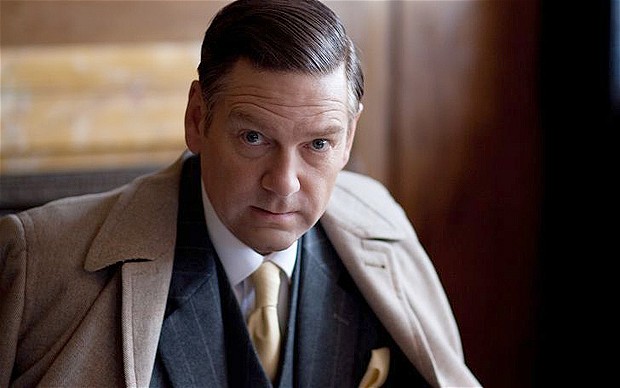
Kenneth Branagh for My Week with Marilyn

For him: The versatile writer-performer has often been compared to Sir Laurence Olivier in his career, and now he plays him in this film! In all seriousness, this is Branagh’s fourth career nomination, having been shortlisted before for acting, writing and directing. He’s distinguished himself by appearing in small independent productions, Shakespeare adaptations and big-budget Hollywood films. Branagh is also notable as being one of the few performers who can comfortably transition behind the camera and appear as a journeyman director, while still leaving his artistic credibility intact.

Against him: His work here has been overshadowed, despite his being shortlisted for all the important guild prizes, by his co-star Michelle Williams, one of the Best Actress front-runners. He’s also up against two very respected veterans, each of whom makes a more compelling case for being rewarded for an Oscar, performances aside. It may not be his time, at least not yet.

Jonah Hill for Moneyball

For him: Famous funnyman turns serious actor and is rewarded with a nomination. He appears alongside Brad Pitt in a Best Picture nominee and, if that film pulls off a mini-sweep, he may be swept up along with it.

Against him: His body of work to date. Known as a comedy star appearing in Knocked Up, The 40-Year-Old Virgin and Forgetting Sarah Marshall, Academy members may not take him seriously due to his previous work in comedy. It’s unfair of course, but voters may wish to wait a while until he further proves his versatility in other dramatic roles before rewarding him. He’s up against some tough competition, mainly longtime veterans with considerable support in the Academy’s ranks.

Nick Nolte for Warrior

For him: Now on his third nomination, Nolte has long been respected for his work and it may finally be time for him to win an Oscar.

Against him: Unfortunately, it may also be time for two other veterans – namely Plummer and von Sydow – to also win Oscars for their performances in films that are more widely seen. Nolte needed critical prizes to boost his campaign, and he is his film’s sole nomination, indicating perhaps a lack of support for Warrior.

Christopher Plummer for Beginners

For him: One of the juiciest roles of the year, Plummer plays a father who comes out of the closet and finally lives the life he wanted after half a century in the closet. This role requires him to deliver heartfelt speeches, take on a unique character and have a death on-screen. Plummer won the lion’s share of critics’ awards that Broos didn’t pick up, plus awards from SAG, BAFTAGlobe and Critics Choice to boot. Plummer’s role may have been in a comedy, but it’s of the dramatic variety and that’s somehow OK to Oscar voters than a raucous laughfest. Plus, the Academy might just enjoy the tantalizing opportunity to reward Captain von Trapp of the beloved Sound of Music. A win here could give the previous nominee de facto career victory. So how could he lose?

Against him: He could lose to another veteran with a career as long as he’s had, that’s how. He could split the beloved veteran vote with Max von Sydow, and given that he represents Beginners’s sole nomination, there may not be enough widespread support for the film overall to give him the big win.

Max von Sydow for Extremely Loud and Incredibly Close

For him: With a long career including roles in Ingmar Bergman’s most iconic films, Hollywood classics such as The Exorcist and prestige projects like Pelle the Conqueror, for which he received his only previous nomination, von Sydow could pull a surprise win here as the equivalent of a career victory, much like Plummer. His advantage over Plummer is that he’s appearing in a Best Picture nominee, much like Hill, and could be the film’s only legitimate shot at an Oscar win.

Against him: His film, despite the nomination, was widely panned and didn’t gain the traction at the box office many predicted. Voters may also consider that this particular film, measured against his other works, may simply not measure up in stature and may not be the appropriate vehicle to give him an Oscar. Even Plummer’s film was met with enthusiastic critical response and wasn’t a box office flop like Extremely Loud and Incredibly Close.

Prediction

It’s going to be a tight race between Plummer and von Sydow for the award, and only Branagh has a real shot to come between them. Nevertheless, I’m betting that all that talk of an Oscar for Plummer since his film opened last summer will be realized on February 26.

The Oscar will go to: Christopher Plummer for Beginners

Saturday, February 4, 2012

Oscar 2012: Best Supporting Actress

I know I’m a bit early in predicting Oscar winners, but this year this particular major category is all but a mortal lock, so I’m going to write about it so that I can concentrate on other categories. Here is the breakdown of the possible reasons why each of these nominees can or will win the Oscar this year.

Bérénice Bejo for The Artist

For her: A major breakout role in a Best Picture nominee, the charming French star Bejo could benefit from her constant promotion of the film at Academy screenings and Q&As. This strategy worked well for then-little-known Marion Cotillard, who won the Best Actress Oscar four years ago for her unforgettable work in La Vie En Rose. This role is a bit of a category cheat, since it’s arguably a leading performance given the amount of screen time she has. (Heck, even the BAFTAs put her in the leading actress category.) Bejo has been nominated for every major guild prize, including SAG, Golden Globe and Critics Choice.

Against her: It’s a non-speaking role in a silent film, and Academy members may want to hear her in a speaking part before deciding to award her with their most glittering prize. Despite her numerous nominations, she didn’t win any of them and is usually considered an also-ran, category-wise. Bejo’s nomination may itself be the reward.

Jessica Chastain for The Help

For her: Another breakout performer, Chastain has no less than six films in play this year, with roles in Ralph Fiennes’s Shakespeare adaptation of Coriolanus, the indie favourite Take Shelter, the little-seen Texas Killing Field, the political drama The Debt and The Tree of Life, the latter making her the only nominee in this category to appear in two of the year’s Best Picture nominees. Chastain’s prolific presence gives true meaning to the term supporting actress. She had a major run of the critics’ prizes, winning awards in almost all major groups whilst sharing in Best Ensemble citations from SAG and Critics Choice.

Against her: The sheer body of work this year may be to her disadvantage, as she has also lined up a number of roles coming out for the next two years. Her versatility could, in fact, indicate to the Academy that since she could become a major star, she may have other chances to be rewarded. Chastain could also split votes with her co-star, the beloved Octavia Spencer.

Melissa McCarthy for Bridesmaids

For her: If ever there was a single memorable scene from any of the five women in this category, it’s likely McCarthy’s character’s unexpected bowel movement in a posh bridal salon. In other words, given the material she had to work with, she just might be the most fearless performer of the bunch. Short-listed for numerous awards and the unexpected winner at the Boston Film Critics, McCarthy is also the most high-profile nominee, since she appears weekly in the CBS hit comedy Mike & Molly, for which she won a surprise Emmy Award last fall.

Against her: That bathroom scene, puerile as it is, may turn off Academy voters who are already allergic to comedy. She also doesn’t have the aid of appearing in a Best Picture nominee or a prestige project unlike her other fellow nominees.

Janet McTeer for Albert Nobbs

For her: Veteran British character actress goes drag king à la Gwyneth Paltrow and Linda Hunt, and may end up being rewarded for her gender-bending performance. She easily received the best notices accorded the film, even from those critics who didn’t like Albert Nobbs. Plus, she has a theatre pedigree, having won a Tony Award in the past and appearing in prestigious British film, TV and stage productions.

Against her: The film doesn’t have the momentum of any of the women appearing in Best Picture nominees, or the sheer wide audience appeal of McCarthy’s movie. She needed critical prizes and not just rave reviews to boost her chances.

Octavia Spencer for The Help

For her: Winner of the SAG, Globe and Critics Choice awards, it’s a scene-stealing turn in a Best Picture nominee and popular hit. She also shared in some critics’ group awards along with co-star Chastain, and her gracious appearances on the awards show circuit have been well-received. She is a popular favourite and has also been seen supporting smaller independent projects at Sundance, proving that she has a wide and varied list of colleagues and friends rooting for her to win. (Some of them are even Academy members and reputation goes a long way. Just ask Eddie Murphy.)

Against her: Possibility of split votes with Chastain, but otherwise there are none to think of. Even those who didn’t like the help agree that her performance was a highlight.

Prediction
Unless she declares her undying love and devotion to Kim Jong-Il or defects to North Korea, Spencer has this one in the bag.

The winner will be: Octavia Spencer.

Sunday, January 29, 2012

Oscar 2012: SAG Award Winners

Let me get this out of the way: Octavia Spencer and Christopher Plummer will win the Oscar for Best Supporting Actress and Best Supporting Actor, respectively. They just won in their respective categories at the Screen Actors Guild Awards tonight, having also swept through the Critics Choice and Golden Globe Awards and each winning a packet of critics’ notices. The die has been cast, those races are officially over. Now let’s turn out attention to the three big winners and see if we can read the Oscar tea leaves from them.


Best Ensemble: The Help. Six years ago, a small independent film premiered at a major film festival, where it won top honours. It then played at major festivals in the fall, swept through the critics prizes, was named Best Picture at the Golden Globes and also won the Producers and Directors Guild of America awards. This was in spite of (or maybe because of) the film’s high concept that drew critics and very enthusiastic fans. Darkening the then clear-waters, however, was a SAG Ensemble win to its chief rival for the Best Picture Oscar, a racially-charged drama featuring a big cast, some good critical notices and some controversy about the film’s point of view and how accurate / enlightening / patronizing it allegedly is. The small independent darling was Brokeback Mountain, and the racial drama that was named Best Picture was Crash.

Flash-forward to today, and you’ll see a parallel if you substitute Brokeback Mountain for The Artist and Crash for The Help. Do you see a possible upset in the Best Picture Oscar race?

But then you point out: Crash had wider support due to its corresponding nominations for Best Director, Screenplay and Film Editing, none of which The Help has despite its many acting citations. This is true, but what The Help has is insane popularity among audiences and the guild. This is important because the Academy is 1) largely comprised of actors, and 2) love to honour a big box office hit. While I’m not saying that The Help will win Best Picture, it certainly made a very strong case by sweeping Best Ensemble and both Actress awards at SAG. The last film to do so was Chicago, which swept through the 2002 Oscars and danced away with six prizes including Best Picture. This is not to say that The Artist will not win Best Picture, either. This is simply to point out that if The Help is named the year’s best film, there is precedent for it.

Best Actor: Jean Dujardin in The Artist

This is not to say that the incredibly-reviewed silent French comedy will walk away without a major Oscar. It’s the front-runner for Best Director, with its helmer Michel Hazanavicius taking the Directors Guild of America prize just last night, and its star’s unexpected triumph at SAG over the likes of George Clooney and Brad Pitt just turned this category from a match-up between the two megastars into a genuine three-way race. Dujardin already has a Golden Globe and Cannes Best Actor notice, and a win here could forecast an upset in Best Actor. This was supposed to have been a slam-dunk for Clooney’s work in The Descendants, but this is no longer the case.

Tuesday, January 24, 2012

Oscar 2012: Nominations Analysis

Jennifer Lawrence and AMPAS President Tom Sherak
announce this year's nominees

After hours – nay, weeks – of sitting through awards shows, following up on critics groups’ prizes and the likes, here are my thoughts on what went down with this morning’s Academy Award nominations announcements:

Stephen Daldry should be called “the Oscar whisperer”. Why? Because he now has a 100% strike rate of his films being nominated for major Academy Awards. Following Billy Elliott, The Hours and The Reader, his Extremely Loud and Incredibly Close sat on the benches at the Critics Choice Awards and received no citations from other critics or industry groups. The film has also opened to soft box office. Now the biggest group of them all has bestowed surprise nominations for Best Picture and Best Supporting Actor (for Max von Sydow) on the film. This is also a testament to Scott Rudin’s powers as a producer. Together, they got the right people into the seats to watch the film, got the intended reaction, and these two big noms are the reward. Extremely Loud is still a long shot to win any awards, but this was the biggest surprise call of the morning.

The leader, with 11 nominations: Hugo
There is no such thing as a “done deal”. Sometimes this happens, as when Slumdog Millionaire, Schindler’s List and Gandhi marched to victory. Every so often though, a “done deal” was not meant to be: cf. Brokeback Mountain and Saving Private Ryan. However, the fact that there is a large diaspora of nominations to different films means that there are several “camps” of support, so to speak, supporting each of the major nominees. You have the popular consensus with The Help, the Terence Malick fans for The Tree of Life, cineastes for Hugo and The Artist, but with so many different choices for Best Picture and no clear front-runner, the question then becomes: is there a film that is well-liked enough by the many different groups that can produce a consensus winner? While nominees are chosen by a weighted preferential ballot, the winners are selected simply by ticking one name in each category. What will be the one film that everyone chooses? If there are passionate supporters in each group, but a larger number of more indifferent voters, then it’s entirely possible that a film that pleases everyone but isn’t considered “The One to Beat” might scoop up the big prize. This is why I would keep my eye out on Midnightin Paris. Its major noms in writing and directing to back up its Picture citation might indicate stronger support for the film that one might think. Also consider that with nine Best Picture finalists, in theory, all split votes being equal, a film may only need about 11.2% of the electorate to win.

There is no such thing as a “lock” for a nomination. The snub list this year includes some heavily-decorated critical favourites and respected talent. Who didn’t make the list but who was expected to? Try Tilda Swinton, as We Need to Talk About Kevin was completely shut out despite her winning critical prizes, working the talk show circuit and appearing at different awards groups at which she was a nominee. Perhaps the Academy just didn’t want her to show up in a designer frock that no one understands, again, or perhaps they just couldn’t bring themselves to watch such a bleak film? Either way, Swinton already has an Oscar and is one of those types who would laugh off the slight. The same could be applied to Charlize Theron in Diablo Cody’s critically-adored Young Adult. Also missing is Albert Brooks, the main challenger to Christopher Plummer in Supporting Actor, who just might have clinched a win with the absence of his chief rival for the prize. Michael Fassbender, with such an amazing breakthrough year, couldn’t translate one of his revered performances in Shame, Jane Eyre or even X-Men: First Class into a Best Actor nomination. Leonardo DiCaprio proved he wasn’t as popular as everyone thought, as J. Edgar also came up empty despite numerous precursor nominations. And although many had considered her a sure thing as part of The Descendants’ campaign, Shailene Woodley’s excellent work in that film was not recognized.

Friday, January 20, 2012

Oscar 2012: Nominations Predictions

For all of the campaigning, money and crystal-ball gazing, Oscar nominations predictions still seems to be an ineffective science. Anyone who’s been watching the precursor awards or at least keeping up understand that an alchemy of popularity, critical consensus and campaigning will somehow land a performer, writer, director or film a nod for the big prize. No one will truly know who gets nominated except for the Academy’s accounting team.

Without further ado, here are my predictions for who receives Oscar nominations in major categories. Keep in mind that these are by no means slam-dunk nods and we could be completely surprised. I threw out the playbook a couple of times when I thought Cold Mountain and About Schmidt would both float in on waves of nods (oops) and underestimated the popularity of Seabiscuit and The Pianist, respectively, in those years. I’m also listing one or two alternates per category, and including mentions in “should be here” to denote personal favourites that I don’t think have a shot at getting into the big dance (which I will call the “wishful thinking” category).

Best Picture: 

Mara for Best Actress? Possibly.
The Artist, The Descendants, The Girl with the Dragon Tattoo, The Help, Hugo, Midnight in Paris, Moneyball, War Horse

Alternates: Drive, The Ides of March

Should be here: Harry Potter and the Deathly Hallows Part 2, The Tree of Life, Melancholia

I have to state that this is a bit of an asterisk, as the Academy will nominate somewhere from 5 to 10 films this year for Best Picture. The exact number is unknown, so I’m going with a middle of the road approach and predict 8 slots. This could be as little as 5 or as many as 10 this year!

Best Director: 
A bride, but not a Bridesmaid: Lars von Trier's Melancholia 

David Fincher (The Girl with the Dragon Tattoo), Michel Hazanavicius (The Artist), Alexander Payne (The Descendants), Martin Scorsese (Hugo), Steven Spielberg (War Horse)

Alternate: Terrence Malick (The Tree of Life)

Should be here: Woody Allen (Midnight in Paris), Lars von Trier (Melancholia)

Malick’s film has won over critics groups, and he can’t be ignored entirely. However, his being snubbed by even the Directors Guild of America does not bode well.

Best Actor: 

George Clooney (The Descendants), Jean Dujardin (The Artist), Michael Fassbender (Shame), Gary Oldman (Tinker Tailor Soldier Spy), Brad Pitt (Moneyball)

Alternate: Woody Harrelson (Rampart)

Should be here: Leonardo DiCaprio (J. Edgar), Owen Wilson (Midnight in Paris)

I am going waaaaaay out on a limb here for Harrelson, but for those of you who think he’s still Woody Boyd from Cheers, may I remind you he’s been nominated twice for an Oscar before, including once in this category? Otherwise, I think this is a solid bunch, and I doubt that DiCaprio’s excellent work in the otherwise undistinguished J. Edgar can make it.

Wishful thinking: Alan Rickman
Best Actress: 

Glenn Close (Albert Nobbs), Viola Davis (The Help), Meryl Streep (The Iron Lady), Tilda Swinton (We Need to Talk About Kevin), Michelle Williams (My Week with Marilyn)

Alternate: Rooney Mara (The Girl with the Dragon Tattoo)

Should be here: Kirsten Dunst or Charlotte Gainsbourg for Melancholia, Kristen Wiig (Bridesmaids), Elizabeth Olsen (Martha Marcy May Marlene)

There’s plenty of competition for these five slots this year. At one point Olsen, Dunst and even Charlize Theron of Young Adult entered the conversation. If Dragon Tattoo sweeps into the nominations, look for Mara to displace Close, who should be receiving a second (if not single consolation) nod in Original Song.

Won't you nominate Hemingway
(Corey Stoll)?
Best Supporting Actor: 

Kenneth Branagh (My Week with Marilyn), Albert Brooks (Drive), Jonah Hill (Moneyball), Nick Nolte (Warrior), Christopher Plummer (Beginners)

Alternate: Armie Hammer (J. Edgar)

Should be here: Alan Rickman (Harry Potter and the Deathly Hallows Part 2), Corey Stoll (Midnight in Paris), Seth Rogen (Take This Waltz)

The vulnerable fifth slot goes to Nolte in the little-seen Warrior vs. Hammer in the reviled J. Edgar, but either has a solid shot at the slot. Rickman has never been nominated and Stoll is a revelation, but I wouldn’t bet the farm on either or both getting in. Again: wishful thinking. And Take This Waltz is a film festival favourite but didn't qualify for the Oscars this year. Maybe next year?

Best Supporting Actress: 

Bérénice Bejo (The Artist), Jessica Chastain (The Help), Melissa McCarthy (Bridesmaids), Octavia Spencer (The Help), Shailene Woodley (The Descendants)

Alternate: Janet McTeer (Albert Nobbs)

Should be here: Carey Mulligan (Shame)

Chastain could have populated this category entirely on her own given her other supporting performances this year in The Tree of Life, Texas Killing Field, Coriolanus and Take Shelter. Mulligan received a surprise BAFTA nomination for Drive, but I don’t see that performance translating here for the showier Shame. The one on the verge is Woodley.

No guts, no glory: A Separation for Best Screenplay?
Best Original Screenplay: 

50/50, The Artist, Bridesmaids, Midnight in Paris, A Separation

Alternate: Win-Win

Should be here: Circumstance, Abel

I’ve been speculating that the twists and turns will get the script for A Separation nominated, and I’m sticking by it in a no-guts-no-glory call.

Best Adapted Screenplay: 

The Descendants, The Girl with the Dragon Tattoo, The Help, Hugo, Moneyball

Alternate: The Ides of March

Should be here: Jane Eyre, Harry Potter and the Deathly Hallows Part 2

Tate Taylor’s like for The Help should make up for him not getting a director nod. If Ides gets Clooney a writing nomination, you know he’s the lock for Best Actor because he’s that popular.

Did I miss your favourite? Will the Academy miss yours? Tune in tomorrow for the nominations.

Tuesday, January 17, 2012

Oscar 2012: BAFTA Nominations

Think that the Oscar campaigning only occurs in L.A. and New York? There’s usually one trans-Atlantic trip required in the season and that’s to London for the annual British Academy of Film and Television, or BAFTA, Awards.

Long thought of as an afterthought to the more prestigious Oscars, the BAFTAs took on new life once they moved their awards ceremony to late February starting in 2001, and with the truncated Oscar schedule in 2004, they moved it up to a scant two weeks before the actual Oscar ceremony. The effect was felt immediately, as the BAFTAs became an important, if not always accurate, indicator of how the Academy might vote and may influence last-minute voters. Most interestingly, the BAFTAs correctly forecast in the last few years some surprise Oscar winners, including Marion Cotillard, Tilda Swinton and Cate Blanchett, and allowed them to pull away from the pack of other frontrunners. This is why the BAFTAs have, in the last decade, proven to be an influential, if not always reliable indicator of who wins the Academy Awards.

The BAFTAs tend to favour homegrown product. This is why films that did not receive much love from the Academy, such as Girl with a Pearl Earring and Cold Mountain, tend to fare better at these awards. Having said that, there is often a strong overlap between what the Academy eventually nominates and the BAFTAs.

You can access the full list of nominees on the BAFTA website and on the Hollywood Reporter’s list.  Here are some of the major nominees:

11 nominations including Best Film
Best Film: The Artist, The Descendants, Drive, The Help, Tinker Tailor Soldier Spy

Best British Film: My Week with Marilyn, Senna, Shame, Tinker Tailor Soldier Spy, We Need to Talk About Kevin

Best Director: Michel Hazanavicius (The Artist), Nicholas Winding Refn (Drive), Martin Scorsese (Hugo), Tomas Alfredson (Tinker Tailor Soldier Spy), Lynne Ramsay (We Need to Talk About Kevin)

Best Actor: George Clooney (The Descendants), Jean Dujardin (The Artist), Michael Fassbender (Shame), Gary Oldman (Tinker Tailor Soldier Spy), Brad Pitt (Moneyball)

Best Actress: Berenice Bejo (The Artist), Viola Davis (The Help), Meryl Streep (The Iron Lady), Tilda Swinton (We Need to Talk About Kevin), Michelle Williams (My Week with Marilyn)

Best Supporting Actor: Kenneth Branagh (My Week with Marilyn), Jim Broadbent (The Iron Lady), Jonah Hill (Moneyball), Phillip Seymour Hoffman (The Ides of March), Christopher Plummer (Beginners)

Best Supporting Actress: Jessica Chastain (The Help), Judi Dench (My Week with Marilyn), Melissa McCarthy (Bridesmaids), Carey Mulligan (Drive), Octavia Spencer (The Help)

Best Original Screenplay: The Artist, Bridesmaids, The Guard, The Iron Lady, Midnight in Paris

Best Adapted Screenplay: The Descendants, The Help, The Ides of March, Moneyball, Tinker Tailor Soldier Spy

The Brits are talking about Kevin
Overall, the nominations haven’t substantively changed the status quo, as the likes of The Artist (with a leading 12 nominations), The Descendants and Moneyball still put them front-and-center in the Oscar race. However, it did give certain British films an opportunity to earn more love than they might have at the Academy. Chief among these are three films starring Best Actress nominees that bagged multiple citations: My Week with Marilyn, We Need to Talk About Kevin, and The Iron Lady. None of these are in the conversation for the Best Picture Oscar, but their presence indicates that these projects are indeed strong female-centered vehicles. It should also be noted that the BAFTAs also tend to honour their own, and each major category often produces a left-field nominee who just happens to be British. This year, they include names that haven’t figured into this year’s Oscar race yet, such as Judi Dench, Lynne Ramsay, and Abi Morgan for her otherwise much-criticized script for The Iron Lady. Similar beneficiaries include Senna, The Guard and Coriolanus.