Showing posts with label Vancouver International Film Festival. Show all posts

Sunday, October 16, 2011

VIFF 2011: The Wrap-Up

So, who else is exhausted?

The Vancouver International Film Festival was amazing this year. I have never taken in so many films in such a short amount of time.

What I enjoyed most were not just the films, but also the enthusiasm and endless patience from VIFF staff and volunteers, the courtesy extended by viewers to each other in line and in the theatres, and the long line-ups around the block to see more experimental film. We may not always get first dibs on major works – we are not Cannes or Toronto or Venice, after all – but the fact that in sheer numbers we are one of the five biggest film fests in North America, with the turnout to back it up, is in and of itself encouraging.

For a list of all my festival-related posts, click here. You will find the festival survival guide at this link, including previews at the following links: Preview 1, Preview 2, Preview 3 and Preview 4. If you came to VIFF, I hope you ate well.

Here are the films I caught during VIFF 2011:

Thank you to the great people at the media office, the volunteers and the rest of the VIFF staff for showing everyone a great time. Let’s do it all again next year?

Saturday, October 15, 2011

VIFF 2011: “Der Preis (The Prize)”

They say you can’t go home again. German writer-director Elke Hauck explores this concept in her film Der Preis (The Prize), about a young German architect who returns to his old neighbourhood in East Berlin. Having won a prestigious design award, Alexander is commissioned to revitalize a Soviet-era apartment complex and oversee the project while it undergoes construction. The architect encounters old friends and acquaintances in the area, not quite comprehending that despite the disappearance of the Berlin Wall over twenty years ago, that this remnant of a bygone era has not only been forgotten in the future of Germany, but its inhabitants share that same malaise, too. It’s strange to think that the old spirit of Communism, now stagnant, has been sucked out of the area and replaced with … nothing much else.

Alex, in particular, has mixed feelings about the era. The film flashes back and forth, without explicitly stating it, to the architect as a young man growing up in the last years of the Iron Curtain. While he quickly climbed through the ranks of the Germany Free Youth, the Stalinist “friendship” group for East German teenagers, his best friend Michael was a punk who quickly fell out with Alex for being a conformist. Challenging authority and consuming more Western culture, Michael becomes increasingly more of a “threat” to the youth of their day. Then tragedy struck in their youth, in that same old apartment complex he has been assigned now, two decades later, to revitalize. Alex feels somehow responsible for what happened in the past and wonders if he could retreat in his mind in order to move forward, because he has never quite let go of the past.

Hauck’s film is framed and composed in the same locked-down spirit of the era. It asks of the country and in particular of Berlin: where have we come from? Where are we now? Where are we going, and with who? Is there a place in the vision of our country’s future for us? Is gentrification the way, or is it the natural enemy of organic growth and development? The film has a stripped-down look with no music score, and it is much stronger in the scenes taking place in 1980s East Germany, with a great sense of time and place. The realist touch removes the comic grandeur of the acclaimed East Berlin-era Goodbye, Lenin! and is as cold as Potsdammerplatz in January. That the production design looks as undistinguished in the present day as it was back in the Soviet era speaks volumes about stagnation and lack of progress. The film’s ultimate resolution is a bold declaration of how this particular section of Berlin responds to change. But will it ever?

The Prize also asks the question of survivalist instincts in a repressive regime. Do those who quietly conform really live, if they survive? And what of those who did not conform, and had a difficult time: did they have a better future when the Wall fell? These are certainly weighty questions to ask, and The Prize offers no easy answers. It will speak most profoundly to those who grew up or spent time behind the Iron Curtain during the Cold War, as they may see their own experiences reflected in Hauck’s representation (like, say, the wayward agnostic looking back at his time in Catholic school). It’s worth mentioning that in German, the phrase “der preis” can translate to either “prize” or “price”. I will leave it to you to weigh and consider this in light of the film upon viewing.

Elke Hauck’s Der Preis (The Prize) played at the Vancouver International Film Festival and has been present at several film festivals this year, including the Berlinale. 

Friday, October 14, 2011

VIFF 2011: “My Little Princess”

Have you ever come across a picture of a teenage celebrity, take one look at the fifteen-year-old girl in full makeup, cleavage-exposing bustier, short-shorts and a sour look on her face, and been completely disgusted? (That, or watched those vulgar toddler beauty pageants: same difference.) There’s an unfortunate discussion of the “pimp parent” and the sexualization of minors in mainstream media. Controversial French-Romanian photographer Irina Ionesco would have scoffed at today’s ruckus, particularly since she did it first in the early 1970s.

Those with long memories will remember Ionesco. A Bohemian, French-Romanian photographer in Paris, she dressed her extremely young daughter Eva in baby doll nighties and full makeup, directed her to pose in vaguely sexual tableau, and sold them as art. This created a firestorm of controversy in the 1970s and pushed the boundaries of experimental art and bad taste. Eva, long out of that line work and still estranged from her mother to this very day, has fashioned her life story into the thinly veiled biopic My Little Princess.

Standing in for Irina is mercurial French actress Isabelle Huppert as Hanna Georgiu. She is given to wearing long flowing gowns, even in broad daylight, vanishes for long periods at a time, hangs around with artists and is the kind of self-involved Bohemian who douses herself in perfume to avoid the necessity of bathing. Having returned from yet another mysteriously long absence, Hanna reconnects with daughter Violetta and has her pose in erotic Lolita-style photography, passing them off as art and fetching thousands of dollars for them. Her excuse for not backing down is that she refuses to be “mediocre”, which if you think about it is really a Bourgeois cop-out she will not confess to (she’d sniff with a snooty yet juvenile “you just don’t get it”). Not quite understanding what is going on, Violetta soon becomes increasingly sexualized in her dress, showing up to school in satin short-shorts and halter tops. Did I mention that Violetta is ten years old? A natural model on camera, it’s disturbing to see her pose so effortlessly. Eventually, Violetta grows to adore and resent the attention her mother’s work brings her, loving the way the camera gazes at her yet loathing the heckling at her elementary school.

Ionesco keeps the film in check so that it doesn’t become uncomfortable or tacky. Thankfully, we do not see full-on underage nudity, despite the film’s subject matter. She has chosen the actors for what is essentially a Mommie Dearest dynamic very well. Newcomer Anamarie Vartolomei as Violetta, shining impressively with a feral energy that matches Huppert’s regal, self-deluded Hanna. By focusing on the relationship, Ionesco conveys the fact that the mother is not the only monster on screen. It’s shocking to see the daughter grow a false sense of entitlement and thereby become a beast of nature, particularly since she isn’t even a teenager yet, and one wonders just how badly the mother screwed her up. Huppert in particular has the harder job, delicately balancing Hanna’s love for Violetta with her own insatiable need for celebrity, given that she’s failed as an artist on so many other levels. My Little Princess fits well into the subgenre of the stage parent melodrama. (At this point you can lump the label “pimp parent” into that category, too.) By humanizing the parent and making the daughter hell on wheels, Ionesco shows how both parties are complicit, even if neither truly understands the nature of what they have wrought.

My Little Princess played to packed theatres at the Vancouver International Film Festival. As no North American release date has yet been announced, it may be a foregone conclusion that we may once again miss out on one of Huppert’s challenging, amazing performances. For more information on the film, click here.

Thursday, October 13, 2011

VIFF 2011: “Elena”

Elena is a former nurse and live-in caregiver now married to Vladimir, a former elderly patient. They live in a luxurious modern flat in an unnamed Russian city. Vladimir’s daughter is the spoiled Katya, who lives a hedonistic lifestyle he supports, and shows up occasionally to simultaneously berate and coddle her father. Elena’s unemployed good-for-nothing son Sergei lives in a dank Soviet-era apartment he shares with his wife Tanya, teenage son Sasha and an infant boy, where the electricity cuts out and graffiti adorns the nondescript entrance facing an abandoned wood where gang fights happen regularly.

Elena discovers that Sasha gets involved in those increasingly dangerous gang wars and wants to send him to a good university, lest he be drafted by the army or end up rotting in prison for petty crime. She pleads with Vladimir for the money, but because Sergei and his family are Elena’s children from a previous marriage, he will not help them. One day, chance intervenes and there is an opportunity for Elena to get the money to help her son’s family, after all. The means by which she can do so, however, are rather unsettling and constitute a moral dilemma that vaguely recalls those other purveyors of Russian misery and ethical debate, Tolstoy and Dovstoevsky. The results are chilling.

Andrei Zvyagintsev’s remarkable film Elena played out of competition at Cannes this year, where it received the Special Jury Prize in the Un Certain Regard section for non-competing films. Regarded as an important landmark in Russian film, it’s easy to see why. Elena is a modern parable and an analysis on how Russian society has been evolving and may evolve in the future. In this film, we see four generations of the same country represented: the old guard who have siphoned off most of the wealth and hoarded it for themselves once the Iron Curtain fell; the aging baby boomers who constitute the professional working class; the Gen X-ers who came of age in the dawn of Russian capitalism and who are now slave to rampant sloth and alcoholism; and the post-Soviet youth who couldn’t have ever fathomed standing in bread lines. Taken as sociopolitical allegory, the film traces the flow and redistribution of wealth in contemporary Russia, and who will inherit and become the nation as the class divide ever widens between the mega-wealthy and the destitute who survive on the average income of $600 a month. It’s not difficult to see, in the end, how the new generation of “spoiled bratskis” came about, the ones whose obscene displays of nouveau riche through wild spending and frequent trips to GUM and TSUM obscure the country’s true state from international headlines.

That Elena takes place in a completely nondescript city with no identifying markers just might make this contemporary Russia’s answer to American Beauty: it speaks to larger social problems that decay the system. And yet Zvyagintsev bookends the film with contrasting images showing that life will somehow go on, even if it continues through misbegotten means and questionable choices. Anchoring the film is veteran Russian actress Nadezhda Markina, in a remarkable performance where she doesn’t say much, but communicates so much with body language and subtle movements, like a great silent film actress. There’s also an elegant score by Phillip Glass, one that flows throughout and lends the film an appropriately chilly demeanour.

Elena played to capacity crowds at the Vancouver International Film Festival. The reviews have been dazzling, and it has already caused a sensation in Russia not just for its content, but also for its omission as the Federation’s official entry for the Best Foreign Film Oscar. Given Elena’s rapturous reception at film festivals the world over, this is indeed a shame.

Wednesday, October 12, 2011

VIFF 2011: “The Kid with a Bike”

The Dardennes brothers were never one for elaborate filmmaking. These Belgian directors make quietly shattering films on life amongst marginal groups in their hometown, showing how circumstance and terrible judgment can lead to horrible consequences. Past two-time winners of the Palme d’Or at Cannes, their latest feature The Kid with a Bike won the Grand Jury Prize this year (second behind only The Tree of Life) and is screened this week at the Vancouver International Film Festival.

Cyril Catouil (Thomas Doret) is an eleven-year-old boy who loves to ride bikes. His ne’er-do-well father has gone missing. A local hairdresser, Samantha (Hereafter’s Cécile de France), takes him in on weekends, in order to give him structure and keep him out of trouble. She first meets him as he takes shelter from social workers in a medical office, telling him as he clings to her, “not so tight. You can hold onto me but not so tight.” This becomes a metaphor for their often difficult relationship. Over the course of the film, she takes him to see his father, who no longer wants anything to do with the boy, and is often tested by Cyril’s tempestuous nature and penchant for running away, only to return after enduring further humiliations on the playground. Partway through the film, seeking a paternal figure and rebelling against the otherwise convivial and patient Samantha, Cyril is taken under the wing of a local thug and is tempted by a life of petty crime.

Although most coming-of-age films revolve around sexual awakening, The Kid with a Bike focuses instead on early exposure to ethical and moral dilemmas that are often only faced in young adulthood. It’s not often that you get to see youth this young grapple with career defining, life-altering decisions, but Cyril confronts them head-on. It’s not uncommon for the Dardennes to examine this topic, given that their earlier works such as Rosetta, Le Fils and L’Enfant explore the difficulties of life in lower middle-class Belgium. The film has shades of Vittorio de Sica’s classic The Bicycle Thief, down to its very title, as they explore how human nature is governed and tampered by survival instincts. Anyone having worked with disadvantaged or troubled youth will recognize and acknowledge Cyril’s raw anger and sense of abandonment, manifesting itself in criminal tendencies. Social workers and caregivers will also understand Samantha’s frustration in attempting to provide Cyril with a normal life, and his resistance to it. The Dardennes don’t judge Cyril’s actions, they only observe them, and allow the consequences to flow from them without heavy-handed melodramatics, allowing him to experience them and understand them himself.

There are moments when the film is unexpectedly shocking. I am thinking of a conversation between two characters in the film whose dialogue is morally perverse, couched in situational ethics and moral relativism. That nothing has presaged this exchange – the Dardennes shun the use of symbolic imagery or foreboding music to foreshadow what’s coming – makes it even more shocking. (You’ll know what I mean when you see it.) The directors use their trademark lean, sparse presentation style so that what occurs is so matter-of-fact that it’s naturalistic, and will unexpectedly follow you out of the cinema. It makes a seemingly straightforward coming-of-age tale into a dark morality play, albeit a slightly more optimistic one than the Dardennes’ previous work. You won’t forget about this kid or his bike anytime soon.

The Kid with a Bike is one of the best-reviewed and most accomplished films of the year. It will play back-to-back screenings on Friday, October 14, as the closing entry of the Vancouver International Film Festival. The film is in French with English subtitles. For more information, click here. 

Tuesday, October 11, 2011

VIFF 2011: “The Singing City”

Those of you who have been following my blog know that I have a major preoccupation with German opera. In particular, the long and difficult works of Wagner have been known to keep me rapt for the many, many hours that they last. So it was with much anticipation that I saw The Singing City (Die Singende Stadt), a documentary on the Stuttgart Opera’s 2010 production of Wagner’s opus Parsifal.

This mighty opera is not for the faint of heart or the impatient. A long meditation on King Arthur and the search for the Holy Grail, the opera features a cast of hundreds at any given performance and requires considerable endurance from the performers, the orchestra and the audience. In 2010, Vadim Jendreyko was given unprecedented access to the Stuttgart Opera’s unusual post-Apocalyptic mounting of Parsifal, complete with gas masks, scuba gear, nudity and shrunken baby-doll heads worn as headdresses. Jendreyko followed the company for the entire length of the pre-production, covering every aspect of the play. We see how props and sets are built from scratch, and cleaned up after dress rehearsal.

Shot using HD cameras and featuring a magnificent sound recording, the film allows us unprecedented access to the production. We observe the Spanish-speaking costume designer, who doesn’t speak German, as she attempts to balance the director’s design instructions with the logistical impossibilities of singing opera in her designs. We delight in the American tenor attempting to master his pronunciation of the word “unrevealed” in German, to the unending patience and amusement from his dialect coach. The director clashes with the cast, the make-up artists meticulously weave wigs on prop corpses that the audience will barely see, the lighting designer works complicated spreadsheets to ensure that he computes and calibrates the lights just the way the director wants, and the orchestra has to contend with the prop blood spilling out from the urine bags tied to corpses onstage into the orchestra pit. The Opera has an international cast, and at any given time you can hear English, German and Spanish being spoken in the course of rehearsals.

What The Singing City conveys most vividly is the meticulous manpower and efforts of literally a thousand people attempting to bring the director’s avant-garde interpretation of one of the most controversial, complicated operas in history to life for a discerning, cultured audience. Jendreyko forgoes the standard narration and title cards that accompany most behind-the-scenes documentaries and instead plants his cameras at rehearsals, workshops and meetings to give us the sense that we are there. The effect is that rather than having a narrative guide to the proceedings, we view the work as it organically takes shape, lending the documentary a greater immediacy than most other non-fiction features. What’s most exciting is that the film shows us the dignity and joy in work, and in creating art. Every member of the production, from the child chorus to the make-up artist to the sound engineer, is given an opportunity to be seen and heard in the film. Although The Singing City might be a misleading title, it makes sense in the context that everything in the Stuttgart Opera’s building operates within the context of its own rules and governance, much like a city itself. My only quibble is that we do not get to see a snippet of the finished work, but one can easily find these clips on YouTube (the clip is slightly NSFW, but the nudity is used tastefully and not for exploitation or titillation purposes).

The Singing City is playing at the Vancouver International Film Festival, with one final performance on Thursday, October 13. For ticket information, click here, and you can view the trailer here. If you’re interested in more information on the Stuttgart Opera, click here. The film is presented in German, Spanish and in English, with English subtitles, and runs a lightning-fast 92 minutes.

Monday, October 10, 2011

VIFF 2011: "First Position"

Director and journalist Bess Kargman was looking for inspiration for her first documentary feature. One day, while walking in Manhattan, she happened upon a dance recital. Being a former dancer herself, she went into the concert hall and was captivated by an enchanting half-Japanese, half-American dancer named Miko, who was not even ten years old, and decided to make a film about the young ballet talent competition, the Young America Grand Prix. This was the inspiration for her directorial debut, First Position, as she told us at a screening of the film at the Vancouver International Film Festival.

First Position follows a year in the lives of a half-dozen young dancers aged 11 to 17 as they prepared to participate in the Grand Prix. This contest, like American Idol does for singers, can make careers. Prizes include not only performance medals, but highly sought-after dance contracts and major scholarships from the likes of the Royal Ballet Theatre, American Ballet Theater, Royal Winnipeg Ballet and virtually all of the world’s most esteemed dance companies. Kargman was given all-access to these dancers and the competition.

We meet 11-year-old Aran, a charming young dance prodigy living on a US army base in Naples and training in Rome. His fellow competitor Gaya is a young Israeli girl whose mother is a little too intent on making them into a ballet supercouple (they are only 11 years old). Fourteen-year-old Michaela was born at the height of the Sierra Leone civil unrest, adopted by a New England Jewish couple, and now fights various bodily injuries as she takes her shot at a dance scholarship, hoping to one day open a dance academy in her war-torn home country. Sixteen-year-old Colombian Joan Sebastien is sponsored by a former ABT dancer, and carries the hopes and dreams of his family in New York City. Privileged Rebecca is the all-American girl who may have the word “princess” in stencils on her bedroom wall, but who is a studious, disciplined dancer, entering the job market at a time when companies are no longer hiring new talent. And then there’s Miko, the Palo Alto tween who has a glowing, natural stage presence and clearly lives to dance, whose mother has also pushed her adorably clumsy younger brother Jules (J.J.) into the field, hoping to raise two dance stars in her family.

Kargman’s compassionate feature marks the confident debut of a new talent. Having trained as a journalist and a dancer, she explained in the post-screening Q&A to a receptive, appreciative audience that her professional training and understanding of the inner workings of the ballet world gave her the tools to truly explore these aspiring dancers’ lives and interpret the challenges they face to her audience. Write about what you know, they say, and the same is true of directing as it is in any art form. We gain insight from intimate moments, such as Michaela’s mother dying the flesh tones in her daughter’s ballet costumes for aesthetic purposes. Why? Because ballet outfits aren’t available in African-American flesh tones. We follow Joan Sebastian to his home in Cali, Colombia, a world away from Manhattan, and realize that without his mentor’s assistance, they would never have afforded the tuition when the average salary is $250 a month in Colombia. Dance was his way out and into the world. And we see how Miko’s and J.J.’s father moved his entire company’s office closer to the best dance studio in order to give his children’s burgeoning careers flight. These little sacrifices, combined with the hours of punishing practice and debilitating injuries, show how resilient and tough the dancers are.

You will not find stories of anorexia or the artfully perverse fantasia of Black Swan here. Even the so-called stage parents and sadistic coaches are empathetic, not monsters. They simply recognize that their young charges will falter, but also can and will continue to do better. These youth live to dance simply because they are happy doing it, and can better express themselves in their physicality than they ever could in words. And that is the mark of a real visual and performance artist. Kargman has already indicated she will be doing a follow-up film in ten years’ time, to chart the development of these youth into hopefully accomplished dancers.

First Position played to rapt audiences at the Vancouver International Film Festival. You can still catch one last screening on Friday, October 14 by buying tickets here. If you miss it, don’t fret, because Kargman announced that the film was very recently granted a distribution deal in North America and will be coming soon to a theatre near you. For more information, check out the film’s active Facebook page and website.

Sunday, October 9, 2011

VIFF 2011: “Sleeping Beauty”

Sometimes, a work of art is too beautiful to behold but seems a little remote, just out of reach, and not quite accessible. Julia Leigh’s stunning Sleeping Beauty falls into that category of cinematic art.

Lucy (Emily Browning) is a young college student who seems addicted to work of all kinds. She is a high-class prostitute at night and supplements her tuition by also working shifts at a restaurant and doing administrative work in a corporate office. Her most regular client is Birdman, a lonely man who doesn’t ask her to perform anything sexual on him, and prefers her company while he eats his cereal with vodka.

Lucy answers an ad for a night job as a server in an erotic-themed catering company on a freelance basis, with the potential to obtain greater work. The enterprise is owned by a plumy-voiced, exquisite madam named Claire (Rachael Blake), whose soothing demeanour masks the more demeaning aspects of the job. If Charlotte Rampling ever decided to retire from acting, Blake is a surefire replacement, as she has that authoritative, sexy but dangerous voice down pat. Soon enough, Lucy becomes Claire’s “sleeping beauty”, by essentially being knocked unconscious with a sedative in a chamber while rich old male clients have their way with her, but without actual penetration. At some point, Lucy realizes that she needs to know what’s been going on while she’s been unconscious and submissive.

Leigh’s film is undoubtedly inspired by the dehumanizing, cruel edge Michael Haneke brings to the cinema. This is a cold film where we follow the lead character relentlessly but know little of her inner life. What must she be thinking, feeling, saying? She has classmates and roommates, but we don’t get the sense that she has any actual close friends. Browning has a stunning pre-Raphaelite beauty that glows incandescently, and perhaps some of the most perfect alabaster skin ever seen in a film. And yet despite the client’s ability to own her body, she remains as remote and mysterious as a figurine. She is presented in a delicately art-directed chamber that recalls a museum piece on display, but never connects with her clients in any way whatsoever. Perhaps this is Leigh’s point: that owning fantasy is never the same thing as connecting with it.

Ultimately, Leigh has crafted a handsome art piece that, because it rejects conventional narrative form for imagery, might be too difficult for some. As an exercise in cinema, it is exquisitely fashioned, with several unforgettable images that will burn into the psyche. The mise-en-scène is comprised of somnambulist erotic tableaux, and it’s clear that Leigh has a gift for imagery. Browning delivers one of the most daring performances in cinema this year, taking massive artistic risks and laying her body bare (if not quite her soul) showing that she is a serious, challenging type. (Trivia note: the role originally belonged to acclaimed actress Mia Wasikowska.) That being said, the film has a hard edge comparable to beautiful but poisonous flora. There was a lot of uncomfortable laughter at the sold-out screening I attended, myself included. Already notorious for appearing on the Black List of unproduced Hollywood screenplays, this difficult piece requires full attention, and perhaps another viewing, in order to fully digest and decipher its meaning. Leigh’s dialogue is sparse, and she demands that her viewer see beyond the words and images to gather her overall meaning. Although this will no doubt confuse the masses and frustrate mainstream critics, I can already sense that Sleeping Beauty is really a master’s thesis which must be examined in closer detail.

Sleeping Beauty plays at the Vancouver International Film Festival on Sunday, October 9, at 4:00 pm, at Empire Granville Cinema.

Saturday, October 8, 2011

VIFF 2011: “Take This Waltz”

“But I set fire to the rain
Watched it pour as I touched your face
Well, it burned while I cried
'Cause I heard it screaming out your name, your name” – Adele

Sarah Polley’s first film since her stunning, Oscar-nominated Away From Her is a study in marital dissatisfaction and the thrill of something new. Margot (Michelle Williams) is a slightly off-kilter, anti-social hipster who has been married for five years to Lou (Seth Rogen), a chef working on a book of nothing but chicken recipes. On a business trip, she becomes irresistibly drawn to Daniel (Luke Kirby), an artist who works as a rickshaw driver and who just happens to live across the street from them. During the course of several chance encounters, he discovers that she’s unhappy in her marriage, not because of any fault of her husband’s, but because of her own malaise and dissatisfaction. Over time, Margot spends more time with Daniel and they make a date to meet thirty years into the future, because she can’t act on her impulses and her new feelings now … or could she?

This is not a film where true love must conquer all. To leave a dissatisfying situation is the solution that works for everyone. Circumstance can sometime dictate our decisions, and in take this waltz, Polley stealthily introduces that the problem is not merely one of attraction of romantic predicament, but of something deeper and more organic to character. Inspired in no small part by David Lean’s Brief Encounter, if not overtly then in spirit and candour, Take This Waltz is the rare romantic work where no one is particularly villainous or angelic, they are simply who they are and are not purely defined by their actions. Margot is a flake. Lou adores her, even if he is a bit juvenile and plays little jokes on her that never quite completely rob her of her dignity. Daniel is earthy, artistic and bold. Margot’s dilemma is not encapsulated within a conventional plot. It is, much like Blue Valentine (also starring Williams), an intimate character study of the aftermath of great passion and its remains. Ultimately, Polley reveals that happily ever after is not defined by circumstance, but by difficult choices that affect all involved parties. The final scenes is particularly telling and, without ever saying a single word, speaks to a more solemn undertone that has been there all along, but you just never saw until the credits roll.

The film boasts a dream cast that flourishes under Polley’s confident direction. Williams has become one of our most reliable dramatic actresses, following up her Oscar-nominated turn in Blue Valentine with another rich performance. Kirby exudes just enough attraction to make him irresistible, without making him a total creep (even if he is kind of a jerk for not leaving her well alone). There is a great surprise in Sarah Silverman’s brief but effective turn as Lou’s alcoholic sister, who sees everyone more clearly than they could ever see themselves. But the true revelation in Take This Waltz is Vancouver native Rogen as Lou, a great bear of a man who is slightly childish, but whose happy exterior contains a limitless reservoir of feeling. In a scene of slowly cascading heartbreak, he pours out his emotions not in long speeches, but in fits and spurts of quiet desperation. Rogen has heretofore only appeared in puerile comedies, and on the basis of his magnificent performance here should be freed from ever making anything remotely resembling Knocked Up.

Take This Waltz played to packed houses at the Vancouver International Film Festival after a rapturous reception at Toronto. Check the website for more information, including a possible but yet unannounced commercial release date.

Friday, October 7, 2011

VIFF 2011: “Circumstance”

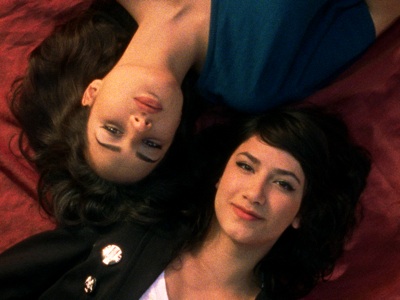
Atafeh (Nikhol Boosheri) and Shireen (Sarah Kazemy) are teenagers living in Tehran. Shireen lives with her uncle and it is strongly implied that her parents left Iran due to their “subversive” ideas. Atafeh is from a well-to-die Ismaili family, to accomplished professional parents. For fun, her father tests her knowledge of classical recordings (Pablo Casals is a particular favourite, it seems). Her older brother Mehran (Reza Sixo Safai) is a former junkie, fresh from detox, who has discovered Allah. Atafeh and Shireen fall in love and dream of escaping their circumstances, fancying not only each other but a life together in Dubai. Meanwhile, Mehran’s rehabilitation has given way to an increasingly fundamental point of view, one worlds away from his old party days. Coupled with his growing erotic obsession with Shireen, he becomes more dangerous as he grows increasingly sure of himself in his new identity, and suspects that the girls are up to something in private. The girls also have regular clubbing friends, including two closeted gay men, one of whom is intent on dubbing Milk into Persian for distribution on the black market.

 This is a film on contemporary Iran and the dichotomy between the outward display of conservative values in public, contrasted with the exciting underground nightlife that can only be accessed with passwords and subtle nods of the head for the initiated. This underworld is dancing on a knife’s edge, as the morality police could swoop in at any moment, ready to make arrests and shut the joint down.

Despite the temptation to make the film into a heavy-handed lecture on the lack of LGBT (and for that matter women’s) rights in parts of the Middle East, director Maryam Keshavarz brings a light touch to the work, almost as if she were caressing the most erotic part of the human body, wherever it might be (on you). To heighten the forbidden love and just how dangerous the lovers’ predicament is, the camera switches stocks every so often, shifting the focus to an unknown CCTV feed, demonstrating that they could be caught and punished anywhere, anytime, for lesser offences such as playing western music too loudly in their car or letting too thick a lock of hair peek out from underneath their veils. Imagine the consequences if the true nature of their love were exposed. Keshavarz understands that sometimes, all you need is a look in your eye, or the unspoken presence of a key character in a scene, that gives you all need to know. This is a film so intimate that it’s almost as if we were eavesdropping on inner monologue. That this is Keshavarz’s directorial debut, one filmed in secret in Beirut and with a powder keg of a subject matter, makes this an even more remarkable accomplishment.

Director Keshavarz with the cast, receiving the Sundance
Audience Award in January 2011
Circumstance received the Audience Award at Sundance and is easily one of the best films of the year. The film was presented at VIFF with co-sponsor Vancouver Queer Film Festival. The weekend screening was sold out, which portends a potentially successful commercial release, with star (and recent Best Actress winner at the LA LGBT Film Festival) Boosheri present to introduce her breakthrough performance. For more information, check out the film’s website and this thoughtful New York Times article. 

Thursday, October 6, 2011

VIFF 2011: “Sushi: the Global Catch”

In my VIFF survival guide, I mentioned some of the dining options for those attending the Vancouver International Film Festival, and in particular the literally dozens of Japanese restaurants within inches of the theatres. Given the vast appetite for sushi from locals, Japanese expats and exchange students, it shouldn’t be a surprise that the food would itself become one of the subjects of the film festival.

Mark Hall’s non-fiction Sushi: the Global Catch documents the sushi industry from the moment the fish are caught to the time it is served on a diner’s plate (that sounds like a horror version of Finding Nemo, but I can assure you it is not). We follow fishermen around the globe as the fish are caught. We pay a visit to Tokyo’s Tsukiji Market, the world’s single largest fish seller, where a quality assurance professional assesses a new tuna once every 17 seconds on average, checking for oxidation, eye clarity, oil content and clarity for export. We encounter Iron Chef America contestant Tyson Cole, the executive chef of the famed Texan sushi bar Uchi. We discover that the tuna industry is cannibalizing itself by overfishing and unfortunately reducing the global supply of Atlantic Bluefin Tuna to less than 10% of what it was just fifty years ago. There’s a visit to a fish farm facility in Port Lincoln, Australia, to combat the decreasing supply of wild tuna, and also a trip to Tataki Sushi, a San Francisco sushi restaurant that boasts of serving the world’s first sustainable sushi by using alternatives to overfished product. And of course, apprentice sushi chefs and the code of conduct, skill and etiquette required from the master chefs. For those of you considering an alternative career, just remember that it takes seven years to train a sushi chef, the same amount of time it takes to train a lawyer. Word.

Sushi: the Global Catch is to the tuna industry what An Inconvenient Truth is to big oil and environmental wastefulness. Hall does an excellent job capturing the market, its practices, its demands, and how we can take better care of the ecosystem without sacrificing or going cold turkey on sushi. (As someone who eats it at least once a week, you can imagine how relieved I am.) Although essentially a project to raise awareness of our limited ecosystem, this should not be treated as a tree-hugging manifesto. Ocean ecosystem sustainability is a goal shared by veteran Japanese fishermen, who recognize that overfishing would mean that their livelihood will cease to exist, and they share a simple piece of wisdom: don’t stop eating tuna, just don’t eat it until you are full. Sometimes, common sense fails us, but is the best advice. And it would be a shame to lose the art of sushi-making, since it is in of itself artful and masterful.

Thankfully, the filmmakers have provided information on Seafood Watch, an initiative of the Monterey Bay Aquarium that lists endangered seafood, and suggests eco-friendly but no less savoury alternatives. Heck, they even have an app for it, and as someone who has never enjoyed unagi, I am quite attracted to Tataki’s cod-based alternative named “pho-nagi”. Hall has captured some beautiful images of Atlantic Bluefin in their natural habitat, and the crispness of the images rival that of what you’ll find on the Discovery Channel’s HD feed. After watching this film, you will likely crave sushi and choose to partake in one of the many Japanese restaurants along Granville Street, next to or within quick walking distance of the theatre. And you’ll wonder, and ask, just what kind of fish they serve there.

Sushi: the Global Catch will play on October 8, 10 and 14 at Empire Granville Cinema during VIFF, in partnership with the World Wildlife Fund. The documentary is presented in English and Japanese, with English subtitles. For more information on the film, visit the website, and visit the VIFF website for ticket information.

Wednesday, October 5, 2011

VIFF 2011: “The British Guide to Showing Off”

Imagine a beauty contest where the contestants do not represent nations, but totally cockamamie ideas. The entrants comprise men, women and everyone else on the sexual identity continuum. You are permitted to bring assistants to help you carry your train, which is attached to the replica of the Empire State Building you are wearing on your head as a hat on top of your bright pink wig. The entrants’ names are “Miss F*** It”, “Miss Trailer Trasher”, “Miss Beauty with Cruelty” and “The Princess of Whales”. Contestants often appear in full kabuki makeup, and some discovered the wonders of body glitter and full blue facial wear long before the Blue Man Group formed. Welcome to the Alternative Miss World.

Jes Benstock’s kooky but ridiculously funny British documentary The British Guide to Showing Off charts the history of this ludicrous but infamous slice of pop culture. Originally started as a one-off event by British conceptual artist Andrew Logan, distinguished as the only living artist in the UK with his own museum, the pageant started on a lark in 1972 and was so notorious that it attracted the likes of Andy Warhol and his Factory, Derek Jarman and Leigh Bowery, who often competed as a contestant (he was “Miss F*** It”). The initial event was so jam-packed that the hip and notorious of London climbed through the windows to enter the venue, and even David Bowie, at the height of his Ziggy Stardust phase, was turned away at the door. Logan was a man who threw the Sex Pistols a Valentine’s Day Ball. In other words, he was – and still is – so cool that the board of education officially shut down school. The film’s quirky style is best exemplified by matching narration with first-person-account interviews interspersed with pop-art graphic design straight out of old Monty Python skits and pop-up books, mixed with live archival footage.

The Alternative Miss World (AMW) has been staged sporadically over the years, about once every three years or so on average, with minimal corporate sponsorship (if any) and a lot of chutzpah. Anything could happen. One of the earliest pageant hosts was no less than legendary drag artist Divine. Heck, Logan’s entire family, regardless of sexual orientation, participated as judges, participants and in any capacity the show needed. (AMW developed a reputation for being all-inclusive in terms of its contestant roster, and everyone was welcome to compete more than once.) As its notoriety grew, the spectacle encouraged more and more incredulously inventive entries, and celebrity judges over the years have included the famed fashion designer Zandra Rhodes, comedian Billy Connolly, producer Brian Eno, venerable character actress Sian Phillips and Duran Duran keyboardist Nick Rhodes. As the show gained further status as one of the must-see cultural celebrations, it occupied a strange place in British art and culture as an art show never fully assimilated into the mainstream. One year, a British politician actually participated in bizarre costumes designed by filmmaker Sam Taylor Wood.

What The British Guide to Showing Off captures is the spirit of the AMW as culture evolved. This venerable yet still edgy art spectacular has survived the punk era, the New Wave-Romantic age, the outbreak of political hip-hop and the co-opting of queer imagery into contemporary culture, and is still standing. You can see its influence everywhere, from the imagery of electronic musicians such as Goldfrapp and Ladytron, to high fashion (the likes of John Galliano discovered AMW after the 1981 show and have claimed it as an inspiration) and to Tilda Swinton’s red-carpet sartorial selections. Perhaps the most popular artist who embodies its spirit and fuels her creative image with it is no less than Lady Gaga. When she emerged around 2008, few in the mainstream had seen her style before, and while one can credit her with innovation, one cannot help but view her designs and image as being influenced by the AMW. In fact, I would not be surprised to see her pop up in the next AMW pageant, whenever that might be.

The British Guide to Showing Off is one of the most joyous, raucous documentaries in recent years. It’s a little hard not to be, given its subject matter. The film is presented at the Vancouver International Film Festival by local LGBT newspaper Xtra!, and screens on October 9, 10 and 13. For ticket information click here. 

Tuesday, October 4, 2011

VIFF 2011: “The Front Line”

We all know that war is hell, or at least we know that from the films we’ve seen. Perhaps the gold standard in the graphic, on-the-ground, prestigious battle picture is Spielberg’s Saving Private Ryan. Few have dared to replicate the formula and even fewer have succeeded, particularly since World War II has been depicted hundreds of times, to varying degrees of success. (My own personal favourite being Clint Eastwood’s elegant, understated but emotionally lacerating Letters from Iwo Jima.)

Jang Hun’s 2011 answer to the war film genre is The Front Line, a thoughtful epic on the Korean War, something heretofore covered in Western culture only via M*A*S*H. If you’ve ever seen the seminal film and TV series, you’ll understand that the depiction of the War was the equivalent of Colonel Klink and Hogan’s Heroes to WWII. Seeing Jang’s ambitious film will rapidly dispel any preconceptions you might have about this particular war. Not shying away from the grimness of the battlefield, this is a bloody, visceral picture that takes you directly to the front lines like in Saving Private Ryan and Jeunet’s A Very Long Engagement. It’s not for the faint of heart or the weak of stomach, as there are some rather gruesome sights here.

The film follows a small troop assigned to the front lines of battle and into enemy territory. Although the concept of a “front line” is depicted in an abstract way, in warfare it is clearly marked and in the case of the Korean War, it would help establish the dividing line between the North and the South (a line that still stands today). A South Korean Lieutenant is sent to investigate the murder of a commanding officer who was found with a Southern-issued bullet in his body, and meets an old friend with questionable and perhaps shifting alliances. The entire scene turns strange as he discovers that North Korean POW uniforms, warmer than those from the South, are used to keep warm and also used to intercept enemy territory. The film takes a look back into what happens as they investigate the murder as the enemy draws closer and the war drags on with no end in sight.

A word must be said on the quality of the film presented at the Vancouver International Film Festival. Unfortunately, due to undisclosed reasons, The Front Line is presented in digital format and the copy does not have the crispness one would associate with 35mm or even an HD or Blu-Ray quality. Although the film is perfectly subtitled and the sound recording rivals that of the biggest, loudest Hollywood blockbuster, the copy presented here will not be acceptable to some. There were a few walkouts on the film at the beginning when this was announced. Those who did stay, however, saw an uncompromising vision of war and the toll it takes on its participants.

Character development is the film’s true weak point, as the sprawling company is not shown in civilian life and it is difficult to distinguish one person’s defining traits from another. Ultimately, the effect is one of anonymity and somewhat alienating. Ultimately, the high bar in this kind of war film was set by Saving Private Ryan and Letters from Iwo Jima. The Front Line, despite its admirable qualities and high technical production values, doesn’t quite meet or cross that bar. This film was submitted as the official South Korean entry for next year’s Academy Award for Best Foreign Language Film, and it will be facing stiff competition to receive a nomination.

The Front Line plays at the Vancouver International Film Festival on Wednesday, October 5, 2011 at 9:30 pm at Empire Granville Cinema, having already played two packed screenings in the first days of VIFF.

Monday, October 3, 2011

VIFF 2011: A Survival Guide

So you’ve gotten tickets to the Vancouver International FilmFestival. Or you got one of those super-snazzy all-access passes that allows you to see whatever film you want. And with over 300 films to choose from and a screening happening at almost any given hour, you’ll be tempted to see everything. There is of course the question of whether you can have time to properly eat, hydrate, bathe or even sleep, if you include the after-parties, the Forum, the Q&As and the occasional star sighting.

This is not my first year at VIFF. I’ve seen films in the past, have volunteered with them, seen at least one film every year for over a decade, and am imparting some wisdom to make festival-going a much, much more pleasant experience.

Arrive early. Let’s say you’ve bought tickets or have one of those amazing passes, and you think it’s like a regular film screening where you can wander in late or think you can get seated right away. For newbies or those who haven’t been in awhile, this is not the case. Screenings are seated only 15 to 20 minutes before a film starts. You must wait in line outside the theatre to get in, even if you have tickets, and they are militant about it. Festival-going is not like going to your multiplex, it is taken seriously and film festival fans already know this. Seating is not a free-for-all, they let those in the line ahead go in sooner rather than the ones at the back, and if you’re in a big group, the later you get to the theatre, the less likely you’ll have seating together. Plan to arrive a minimum of 30 minutes before a film starts so that you can have your choice of seating. Passholders are allowed to skip the line and get seated first, and they set aside tickets for passholders to pick up prior to each screening (check your pass for guidelines and usage), but if you don’t get there a minimum of 20 minute before your screening, you take your chances at the will call, and a pass does not guarantee seating.

Vancity Theatre, home of VIFF
Bring an umbrella. Lining up for a screening means being out in the elements, and you should prepare for the weather. If it’s going to rain, for heaven’s sake, bring your umbrella. This is Vancouver, after all, it’s supposed to rain.

Stay hydrated. If you’re skipping from film to film, sometimes the air can get dry in a theatre and concessions stands can get backed up. You should plan to bring a bottle of water from home, so you can stay hydrated throughout the screenings, especially if you have them back to back and have to exit one film and enter another. If you forget to bring water, get bottles at the many Starbucks or 7-11 locations (you can also get them at Subway). If you’re at the Pacific Cinematheque, there are convenience stores and independent coffee bars on Davie Street that are well-equipped with refreshments, and the Vancity Theatre that houses the VIFF head office on Seymour and Davie has a Starbucks next door. (Also, it’s a good idea to get your coffee from these locations.)

Eat something. Each of the theatres mentioned above are in commercial centres, so there are plenty of restaurants about, including all major chains along the Granville Entertainment District. Use Open Table to secure reservations, but watch the timing to ensure your films doesn't run late. If you don’t have time between screenings, it’s a good idea to stock up on snacks (including fruit cups, which will be more satisfying than just popcorn and candy) at any of the 7-11 or other convenience stores scattered along Granville Street. As Vancouver is home to a diaspora of sushi, you will have no problem choosing from the many, many Japanese restaurants located along the strip. If you need something quick and cheap, the city has permitted more and more food trucks serving contemporary West Coast, Mexican, Jamaican, Korean, Chinese, Vietnamese and other foods on the go, which are all littered throughout the downtown core. There’s also the famed Japadog, which has numerous stands and a stand-along restaurant on nearby Robson Street, and it’s a must if you’re from out of town. For the less adventurous stomach or if you just have no time for table service, hit up any of the dollar pizza joints like Numero Uno, major fast-food chains, and there’s also a food court in nearby Pacific Centre Mall.

Sunday, October 2, 2011

VIFF 2011: “How to Die in Oregon”

 In cinema, we often see death portrayed as collateral damage in action movies, especially in car chases and jingoistic machismo Stallone / Norris / Schwarzenegger films. Rarely do we get to question mortality on celluloid as a point of pride, of dignity, and as a right. Peter Richardson’s remarkable documentary How to Die in Oregon, playing now at the Vancouver International Film Festival, gets to pose that question.

The film focuses on Cody Curtis, a then-54-year-old Oregon woman who was diagnosed with liver cancer. She was given a prognosis of six months to live, and anticipated losing her faculties and her dignity well before she loses her life. Cody is a whip-smart, energetic individual who has accepted her prognosis and her mortality, and makes the rational decision to take her own life, on her own terms. It also follows the movement in the State of Washington to pass proposition I-1000, the state’s own right-to-die legislation. Although the film also follows several other subjects and how they deal with the subject, it’s never ghoulish, striking the right balance between acceptance and good humour.
It’s the State of Oregon that first got the national debate on right-to-die legislation and was the first to pass it into law, in 1994.

How to Die in Oregon deals with the subject matter-of-factly. There are no discussions of religion or philosophy, although the film has a strong philosophical slant running throughout. Richardson wisely allows the film’s subjects to do the talking, leaving aside any unnecessary voiceover narration, and simply stating in black title cards when time has passed and a subject has ceased mortality. The film does not demonize the right-to-life organizations or movements who opposed these laws, because that would have been a cheap way to make a point and would have been spiritually removed from the film’s point: that these people who want to take their own lives are making conscious, difficult, rational but emotionally taxing decisions to do so, and they want to do it with their dignity intact. Making the film a left-wing political treatise would render it pure propaganda, rather than the thoughtful, challenging work of art it is. Even the protesters against the movement are given a voice in the film, and it is an eloquent, measured response, unlike the blowhard, extremist but popular soundbites one may expect to hear on Fox News or conservative radio. Richardson chose his subjects well. When I saw this film yesterday, there was not a dry eye in the house. The crocodile tears in romantic narrative dramas have got nothing on the sobering, still sadness and catharsis I witnessed at How to Die in Oregon.

Peter Richardson’s How to Die in Oregon has played twice in the opening days of VIFF and plays one more time on Monday, October 10, 2011 at Empire Granville Cinemas. That the film is playing on the Canadian Thanksgiving will give those who see this intensely moving, almost emotionally unbearable documentary plenty to consider and be thankful for on the holiday. This HBO production has already aired in the United States and has spent most of the year making the rounds on the film festival circuit, receiving prizes at Ashland and Hot Docs, and the coveted Grand Jury Prize at Sundance. You can find out more about the film, and related organizations, on their website.

Saturday, October 1, 2011

VIFF 2011: “Carol Channing: Larger Than Life”

The term “larger than life” has been taken too liberally these days. It has been used to market fast food, describe strange self-empowerment concepts that even Oprah would find odious, and I read an actual article somewhere where the moniker was attached to a certain Jersey Shore cast member.

Wrong. This is just plain wrong. And it must be corrected.

The term “larger than life” is a descriptor used to describe someone who is completely, utterly themselves, and whose clearly defined persona matches an unmistakably signature look. It also aptly describes performers who are so charismatic that their persona overtakes the roles they play, but whose star quality become so intimately ingrained in the role that you don’t mind that they are really playing an extension of themselves. Correct usage of the descriptor includes Julia Roberts in Erin Brockovitch, Lauren Bacall in just about anything, and Carol Channing in Hello, Dolly!

Director Dori Berinstein’s biographical documentary film about the legendary Broadway star whose comic public image belied a good deal of hutzpah and talent is an infectious cinematic confection for those who love the stage. With her smoky voice, matter-of-fact delivery, cherry-red lips and saucer eyes, it’s no wonder she’s so distinctive, and Channing uses it to her advantage. Every inch a star, Channing is a sharp-tongued but never mean-spirited human dynamo. Known for her affinity for mimicry, Channing showboats impressively in the film in Yiddish, French and Russian(!), keeping her tongue firmly in cheek.

The film shows how, in her own way, she is unassuming despite her out-there personality. While the average American in the 1960s saw her on morning local TV shows playing up her kooky image and cutting a rug with the cool kids on Laugh-in, what they don’t know or see is that she would film her appearances after flying in the night before, right after a performance of Hello Dolly! on the road, and get into hair and makeup on little to no sleep, then delivering the goods to the public. Anything to help the show, which she performed on Broadway and took on the road for several years, so solid was her dedication to the role. One dancer she works with quips, “there’s a joke that Carol would attend the opening of an envelope if she thought it would help ticket sales”. Her dedication and sincere belief in the stage play, which she calls “hallowed ground”, is what separates her from the sell-outs who are just out to make a buck. Channing knows that the theater matters, and she wants you to know she recognizes how important it is to her audience. Even at age 90, she participated in a Kennedy Center Honors production and is hoofing it onstage with men half or even a third of her age, and yet every one of those who work with her know she’s the only star. How do we know she’s a dream to work with? In the very successful 1994 Broadway revival of Hello, Dolly!, staged a remarkable 30 years after it took New York and the country by storm and featuring the original star, it’s noted that no one left the production for another job during its entire run. That, folks, is the kind of job everyone wants to have. And no one would have that had it not been for Carol Channing herself.

Playing at the Vancouver International Film Festival, Carol Channing: Larger Than Life runs a lightning-fast 83 minutes and is the rare all-access documentary where the star truly engages the audience without resorting to a scripted “tell-all”. This is an unfiltered look at her life, her memories and her recollections. Her life is not without controversy and she does address them, including her messy divorce in 1998 at age 77, her muted dismissal of fellow stage legend Barbra Streisand in the role of Hello Dolly! on film, and her battle with ovarian cancer. Berinstein’s film of the charming legend will appeal most to high school glee club kids, gay theatre folk and those with fond memories of Channing as one of the biggest stars around. But for the uninitiated, stick around, and let her tell you the story of her life. It’s larger than life.

Carol Channing: Larger Than Life will play at the Empire Granville Theatre on Saturday, October 2 and on Wednesday, October 5. For ticket information, click here.